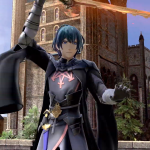
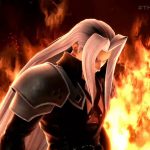
Super Smash Bros. Brawl introduced a wealth of new characters and gave us a slew of returning veteran fighters. The additions of characters such as Pit, Olimar, Snake and Sonic the Hedgehog were cause for celebration around the gaming community – especially so because they hinted that both a Pikmin 3 and a Kid Icarus Wii were in development. This is our detailed character guide with descriptions and images of every playable character in the game. However, this is not a guide to each characters’ moves. That’s coming soon.
Be warned that there are spoilers in the “Hidden Fighters” section of this page. If you do not want to know the hidden and unlockable characters in Brawl, don’t scroll down there! We can’t be held responsible if you spoil the game for yourself.
Veterans
Bowser
Debut: Super Mario Bros. (1985)
Bowser is the main villain of the Super Mario video games, and appears in most Mario games as the final boss. He’s back again – the difference being that this time you can play as him. His size in proportion to the other characters has been increased since his appearance in SSBM. He’s the heaviest player in the game, being so heavy that if he jumps and then land, the screen itself will shake. He is slow, but makes up for this with the sheer power of his attacks. He enters matches by emerging from a wall of flame.
Donkey Kong
Debut: Donkey Kong (1981)
One of the oldest existing Nintendo characters, Donkey Kong has been around for more than 25 years. Originally an antagonist to Mario, he soon became a major protagonist and mascot for Nintendo. He is in the “powerful and heavy” category, though for a heavyweight, he is relatively fast. One drawback is that he is a large target for enemies. He enters matches by bursting out of a barrel.
Fox McCloud
Debut: Star Fox (1993)
Fox McCloud is the leader of Star Fox, and the main protagonist of the Star Fox series. He has appeared in every Super Smash Bros. game so far, and always as a starter. Fox is a speed character, with the fastest walking speed in the game and the third-fastest running speed. Though faster than Falco, he is not as strong, and retains the issue of being easy to KO due to being very light. He enters matches by jumping out on an Arwing.
Ice Climbers (Popo and Nana
Debut: Ice Climber (1985)
Originally, the Ice Climbers only starred in a single game for the NES, so there was surprise when they were brought back several video game generations later for SSBM. Since then, however, they have been gladly welcomed to the Super Smash Bros roster, reappearing in SSBB. The Ice Climbers are unique in that they fight as a duo rather than alone. Separated, they are each weaker than other characters, but while together, they can pull off some fearsome combos. With enough practice, you can even master a grab combo that is so powerful it has been banned from official tournaments. They enter matches by being flown in by a condor.
Kirby
Debut: Kirby’s Dream Land (1992)
Kirby is the main protagonist of his own series of games, notable in that he was created by Masahiro Sakurai himself, also the creator of the Super Smash Bros. series. Kirby is another in the “small and light” category, and has great maneuverability in the air, with multiple mid-air jumps and good recovery moves. His Inhale technique gives him the ability to copy the “neutral B” moves of other players, giving him great versatility and a stylish collection of Character Hats. On the downside, his lightness can be a weakness and his slow recovery is easily predictable. Kirby enters matches by crashing down from a warp star.
Link
Debut: The Legend of Zelda (1986)
This being a Legend of Zelda fan site, you should all know about the main character of the series, Link. He’s been given an extreme makeover since SSBM – both his looks and special moves have been changed to fit the style of Twilight Princess. Link has a long range with his physical attacks, thanks to his sword. He also has a bow, a boomerang and bombs to attack from range. One issue with his bombs, however, is that they can also damage you and your teammates. He enters matches by appearing from a whirlwind.
Mario
Debut: Donkey Kong (1981)
Mario is the most well-known video game character of all time, appearing in over 200 games so far in over 15 game systems, even having television shows, comics and a film dedicated to him. As Nintendo’s mascot, he has appeared as a starting character in all three SSB games so far. He is a very balanced character, having no major flaws in speed, size or power. His new Down-B technique “F.L.U.D.D “ is good at pushing people off the edge of the screen, but unfortunately does no actual damage. He enters matches by jumping out of a warp pipe.
Princess Peach
Debut: Super Mario Bros. (1985)
Princess Peach has appeared as the love interest and “damsel in distress” of Mario games since 1985, generally being kidnapped by Bowser. Her appearances as a playable character have been increasing as of late, even becoming the main protagonist of her own game, Super Princess Peach. She is excellent at horizontal recovery and can even float short distances, but her vertical recovery is weak, as her recovery isn’t designed for it. She enters matches by appearing spinning with her parasol.
Pikachu
Debut: Pokémon Red & Blue (1996)
Out of all the 493 Pokémon in the franchise, Pikachu is arguably the most well known and popular Pokémon in the world, with several games, such as Pokémon Yellow and Hey You, Pikachu being focused on it. He has appeared in all of the games in the SSB series so far. Pikachu has a fast running speed and is great for guarding the edge, but is very light and is knocked off the stage easily. He doesn’t have a very good attack range, having the shortest grab range in the game. Pikachu enters matches by appearing from a pokéball.
Samus Aran
Debut: Metroid (1986)
Samus is the star of the popular Metroid series, considered by many fans to be on the level of Mario and Zelda as a mascot of Nintendo. As such, she has been in every SSB game so far. A common misconception by those unfamiliar with Metroid is that Samus is a man, since throughout the series she usually wears a power suit that covers her completely. In SSBB, however, she is able to switch in and out of her power suit using her Final Smash Technique to a form known as “Zero Suit Samus”, which unfortunately isn’t quite as literal as it sounds. Samus has some of the useful and powerful projectiles, and even her grab technique (a grapple beam) has a long range, though she is vulnerable to attack if she misses with it. Using her final smash will force a change in your playstyle, so if you want to use her most effectively, be sure to master both of her forms. Samus enters matches by walking out of a save point.
Yoshi
Debut: Super Mario World (1991)
Yoshi originally started as a kind of mount that Mario and Luigi could use to move faster that also had the ability to eat a lot of things, including enemies. Depending on the enemy eaten, he would gain various powers. Since then, he has become popular enough to star in several games of his own, and almost always appears in the “Mario sports games”, such as Mario Kart, Tennis, Golf, Strikers, Baseball and Party. Yoshi is fast, and relatively heavy for his size. He also has the highest double jump in the game, though he can be outjumped by those characters with several more jumps, like Kirby. His grabs are ranged, but slow. Yoshi enters matches by bursting out of a Yoshi egg,
Zelda
Debut: The Legend of Zelda (1986)
Princess Zelda is the titular character of the Legend of Zelda series, appearing in every main Zelda game, except Link’s Awakening, in which she was only mentioned but not seen. Her usual role is that of the damsel-in-distress saved by Link, but she has played pivotal roles in the series before, helping in several boss fights. Until the Super Smash Brothers series, however, she has never been a playable character, unless you include the CD-i Zelda games made by Philips, which you probably shouldn’t, because they are considered some of the worst games in history and many Zelda fans even disavow their existence altogether. Zelda’s appearance has changed since SSBM, having been remodeled to look like her most recent incarnation in Twilight Princess, but still keeps the transformation to Sheik that she had in SSBM. Her Din’s Fire spell is one of the most powerful projectiles in the game, but she is slow and a lightweight. She speeds up after her transformation to Shiek, presumably because it’s hard to run in a dress. Zelda enters matches by appearing from a deku nut explosion.
Zelda (Sheik)
Debut: The Legend of Zelda: Ocarina of Time (1998)
Sheik is Princess Zelda’s alter-ego in Ocarina of Time, used to hide herself from Ganondorf. Since then, she has appeared in SSBM, as a Down-B transformation of Zelda with a completely different moveset. There was fierce debate over whether Sheik would appear in SSBB, as she was an OoT-exclusive character, but in the ends, she seems to have been kept. Sheik is very fast in both running speed and attack speed. Sheik enters matches by bursting out from magical sparks.
Newcomers
Diddy Kong
Debut: Donkey Kong Country (1994)
Diddy Kong originally appeared in Donkey Kong Country with a function similar to the Luigi of the NES generation – that of a second banana who appeared as a playable character if Donkey Kong died, and for two-player mode. Since then, his character and personal style have been developed and he has appeared in several other games, starring as the main character in Donkey Kong Country 2 and a major playable character in Donkey Kong 64. This is his first time in a Super Smash Bros. game, however. Diddy Kong has a different style of play to his friend Donkey Kong, and is a speedy character who cannot usually K.O. the opponent at low percentages. A similarity the two characters have is that they can both perform a Double K.O., Donkey by picking up the opponent and jumping off the edge, and Diddy by using his Monkey Flip on a target that’s over the edge. Diddy enters matchers by breaking out of a barrel.
Ike
Debut: Fire Emblem: Path of Radiance (2005)
Ike is the main character of the ninth game in the Fire Emblem series and its sequel, and has taken Roy’s place as the second Fire Emblem character. Ike is a medium-heavyweight character, and is fairly slow but with a high amount of power and knockback. Ike does not have a projectile attack, but his sword has a long range and his Counter move can deflect the projectiles of others, if timed right. Ike enters matches by teleporting in with Warp Powder, like Marth, though his pose is different.
King Dedede
Debut: Kirby’s Dream Land (1992)
King Dedede is the main antagonist of the Kirby series and the self-proclaimed King of Dream Land, though he has also done some good things, and could be considered more of an anti-hero. He has appeared in cameos on the Dream Land stage in SSB and SSBM, but SSBB is his debut as a playable character. Like his fellow antagonist Bowser, he is classified as a “Super-heavyweight”, so he is very hard to knock off the stage, especially considering that like Kirby, he has the ability to puff up for multiple jumps, and his up+B move makes him jump extremely high, giving him a great ability to recover. He is powerful, but has the third-slowest dash speed in the game, tying with Zelda. He also shares other weaknesses with Bowser, such as his large size making him easy to hit. King Dedede enters matches by getting carted in on a throne by Waddle Dees.
Lucas
Debut: Mother 3 (2006)
Lucas is the protagonist of Mother 3, a game that was only released in Japan. Mother 3 is a sequel to Earthbound, the game starring Ness, making Lucas the second character from the Earthbound Universe to appear in the SSB series, or the third if you include Mr. Saturn from SSBM, who appeared as an item. He is light and fairly fast, but surprisingly, he also has some of the most powerful and high priority projectiles in the game. On the down-side, his recovery move can be interrupted, leading to trouble if someone else is falling off the side of the stage with you. Other than the Ice Climbers and Sheik, Lucas is the only character to only appear in one game outside of the SSB series. Lucas enters matches by riding in on Mr. Saturn’s coffee table.
Meta Knight
Debut: Kirby’s Adventure (1993)
Meta Knight is another new addition from the Kirby series, and is a sort of rival to Kirby. He appeared in SSBM as a trophy, but SSBB is his first time as a playable character. His actual relationship to Kirby is unknown, but under his mask is a Kirby-like face, and his yellow glowing eyes are an effect of the mask. Meta Knight is one of the best Aerial characters in the game, with five mid-air jumps and among the best recovery moves in the game. For someone of his size, he has a great range, but lacks knockback power in most of his attacks. He is a fast character, with the fastest attack speed in the game and the 6th fastest running speed, but is light and easy to knock off the stage. Meta Knight enters matches by using his cape to teleport to the stage.
Olimar
Debut: Pikmin (2001)
Olimar is the main playable character of the Pikmin series. He is unique in SSBB in that most of his attacks derive from his helpers, the Pikmin. Olimar can attack by himself, but he is very weak. He appeared in SSBM as a trophy, but this is his first time as a playable character in the SSB series. The Super Smash Bros. games often increase or decrease the original size of the characters, and Olimar is probably the best example of this, since in the Pikmin Universe he’s only about the size of a coin. He is small and light, making him hard to hit but easy to KO. He has the most damaging projectile in the game, with his white Pikmin doing 36% damage each, or 54% depending on the circumstances. Olimar enters matches by jumping out of his ship and plucking three Pikmin from the ground.
Pit
Debut: Kid Icarus (1987)
Pit is an angel from the Kid Icarus series. Interestingly, his last game was all the way back in 1991, and this is his first playable appearance in over 15 years. He appeared in a trophy in SSBM, which hinted at Pit’s appearance in the next game, saying “Will Pit ever fight again?” He was originally planned to be in the original SSB game, but was replaced by Jigglypuff. Pit has one of the best projectiles in the game – his arrows are both fast and controllable. His recovery is one of the best in the game, and he has the ability to glide. He is fast, but light and short on power. Pit enters matches by appearing from a beam of light.
Pokémon Trainer
Debut: Pokémon (1998)
Pokémon Trainer is based on the main protagonist from the original Pokémon games. The developer of the SBB series, Masahiro Sakurai, has shot down the idea that the trainer is based on Ash from the Pokémon anime, saying that “only characters originating from video games” are eligible to be included in Brawl. Pokémon trainer has a unique playstyle in that he does not play at all – he cannot hit or be hit and only appears in the background, using his Pokémon to do his work for him. Since he can switch between three different Pokémon (Squirtle, Ivysaur and Charizard), Pokémon Trainer has 11 spcial moves, the highest number for a character in the game. The Pokémon share the same damage meter, but have a separate “stamina stat” which determines how long a particular Pokémon can stay in the game without getting exhausted. Pokémon Trainer stays in the background of the stage after he has been defeated, looking disappointed.
Wario
Debut: Super Mario Land 2: 6 Golden Coins (1992)
Wario originally was created as a villain, an evil counterpart of Mario, who stole Mario’s castle. Though Mario got his castle back in the end, Wario wasn’t finished. He starred in the sequel, Wario Land: Super Mario Land 3, deciding to get Mario back by getting enough money to buy his own castle so that he could gloat to him about it. After that, he continued to appear in games, sometimes as the protagonist and sometimes as the villain. Eventually, he became known as the anti-hero of the Marioverse. Wario might look like Mario, but he’s certainly no clone – his moves are completely unique and unpredictable. He evens uses farts as damaging techniques. Wario is heavy, but unlike most heavy characters, he isn’t a large target. He enters matches by riding in on his motorbike.
Hidden Fighters
Captain Falcon
Debut: F-Zero (1990)
How to Unlock: There are three ways to unlock Captain Falcon…
- Play 70 VS matches, and then defeat him in a duel.
- Beat Classic Mode on Normal or higher difficulty in less than 12 minutes, and then defeat him in a duel.
- Have him join your party through the Subspace Emissary campaign.
Appearing in the very first SSB, Captain Falcon has become a well-known staple of the series, his iconic “Falcon Punch” instantly recognizable by any SSB veteran. After Sonic, he has the fastest running speed in the game, which is a good thing, as he does not have any projectile attacks and must be in melee range to deal damage. He enters matches by jumping out of his racer, the Blue Falcon.
Falco Lombardi
Debut: Star Fox (1993)
How to Unlock: There are three ways to unlock Falco…
- Win 50 VS matches, and then defeat him in a duel.
- Beat the 100 Man Brawl, and then defeat him in a duel.
- Have him join your party through the Subspace Emissary campaign.
Falco Lombardi is a member of Fox McCloud’s mercenary unit, the Star Fox team. Unlike his appearance in SSBM, in which Falco was practically a moveset clone of Fox, he now has some big differences, the most noticeable of which being that he can kick his reflector shield away from him. He is extremely light, and so can fly off the stage very easily. He enters matches by jumping out of an Arwing.
Ganondorf Dragmire
Debut: The Legend of Zelda (1986)
How to Unlock: There are three ways to unlock Ganondorf…
- Play 200 VS matches, and then defeat him in a duel.
- Beat Classic Mode on Hard with Link or Zelda.
- Have him join your party through the Subspace Emissary campaign by collecting the Link and Zelda trophies.
Ganondorf is to the Zelda series what Bowser is to the Mario series. Link’s constant nemesis, this evil mastermind is always planning to conquer Hyrule. Though his strength lies in his clever scheming, he is also a dangerous hand-to-hand fighter, with some of the strongest moves in SSBB. Unfortunately for him, he shares Bowser’s weakness, in that his great power is balanced out by a lack of speed. Ganondorf has the second-lowest running speed in the game. He enters matches by appearing from a cloud of dark magic.
Jigglypuff
Debut: Pokémon Red & Blue (1996)
How to Unlock: There are three ways to unlock Jigglypuff…
- Play 350 VS matches, and then defeat him in a duel.
- After completing the Subspace Emissary, fight Jigglypuff on the swamp stage.
- Complete both the subspace emissary and Events 1-20, and then defeat him in a duel.
This Pokémon may look small and cute, but don’t let your guard down. The Rest technique is one of the most powerful killing moves in the game, and Jigglypuff’s aerial prowess is second to none, with the ability to use five mid-air jumps in a row. On the flip side of this, however, Jigglypuff’s lightness makes it easy to knock around (the lightest character in the game), and a miss with Rest leaves you vulnerable and unable to move for four seconds. It enters matches by appearing from a pokéball.
Luigi
Debut: Mario Bros. (1983)
How to Unlock: There are three ways to unlock Luigi…
- Play 22 VS matches, and then defeat him in a duel.
- Beat Classic Mode with no continues, and then beat him in a duel.
- Get him to join your party through the Subspace Emissary campaign.
Luigi is Mario’s little brother, and the less famous of the two. Previously, he has just been considered a less important clone of Mario, but he is finally coming into his own. Notably, Luigi finally has a voice actor of his own for SSBB, rather than the sped-up version of Mario’s voice used in SSB and SSBM. He also has a completely different Final Smash known as Negative Zone, chillingly described by his trophy as “a reflection of the dark side he embraced in his brother’s shadow.” He in also unique to the other characters in that one of his taunts can inflict damage, and it can even KO inside the Negative Zone. Unfortunately, he has a low run speed, and his low traction makes him harder to control. He enters matches by jumping out through a Warp Pipe.
Marth
Debut: Fire Emblem: Shadow Dragons and the Blade of Light (1990)
How to Unlock: There are three ways to unlock Marth…
- Play 10 VS matches, and then defeat him in a duel.
- Beat Classic Mode with on any difficulty, and then beat him in a duel.
- Get him to join your party through the Subspace Emissary campaign.
Marth first appeared as the main protagonist of the original Fire Emblem game, which was only released in Japan. His popularity in SSBM, however, influenced Nintendo to release all Fire Emblem games from the seventh onwards internationally. Marth has a fast running, walking and attack speed. His attacks all deal a good amount of damage, and his Final Smash is considered one of the most powerful in the game. Unfortunately, his attacks deal noticeably less damage unless he hits with the tip of his sword, which can be harder to pull off. He also lacks a projectile attack. He enters matches by being teleported in by Warp Powder.
Mr. Game and Watch
Debut: Game & Watch (1980)
How to Unlock: There are three ways to unlock Mr. Game and Watch…
- Play 250 VS matches, and then defeat him in a duel.
- Clear Target Smash with 30 characters on any difficulty level.
- Have him join your party through the Subspace Emissary campaign.
Mr. Game and Watch is the oldest character in the SSB series and indeed Nintendo’s very first video game character, predating even Mario. He was the protagonist of the original handheld console, the Game & Watch, though he himself was not named until SSBM. He is unique amongst the combatants in that he is actually 2D. He can catch and store up projectiles in his bucket, which he can then turn into a powerful attack. Mr. Game and Watch is the second lightest character in the game, so he can be knocked off the stage easily. He enters matches by moving along a row of LCD frames until he reaches the foreground.
Ness
Debut: Earthbound (1995)
How to Unlock: There are three ways to unlock Ness…
- Play 5 VS matches, and then defeat him in a duel.
- Reflect 10 projectiles, and then defeat him in a duel.
- Have him join your party through the Subspace Emissary campaign.
Appearing originally in Earthbound, a game in the Mother series, Ness was a bit of a surprise addition to the first SSB, as he was an obscure one-time character. After SSB was released, he became popular with the players, and has returned for all of the sequels so far. Ness fights by using his psychic powers, which he can manifest into different forms, and a variety of different objects, including a yo-yo and a baseball bat. He has the second-largest jump in the game, and can heal himself by absorbing projectiles, or hit the projectiles back with his baseball bat. He’s a bit fragile, though, and his up-B move can be intercepted by a player, item or wall before he can use it to recover, affecting his ability to recover in enclosed spaces. Ness enters matches by teleporting onto the stage with his psychic abilities.
R.O.B.
Debut: Gyromite (1985)
How to Unlock: There are three ways to unlock R.O.B….
- Play 160 matches, and then defeat him in a duel.
- Get 250 different trophies, and then defeat him in a duel.
- Have him join your party through the Subspace Emissary campaign.
R.O.B. is based on a peripheral for the NES console, made to look like a toy rather than a video game so that it would be sold by toy stores. R.O.B. is a powerful and heavy character, with strong throws and multiple projectile attacks. Unfortunately, his large size makes him easy to hit. R.O.B. enters matches by dropping from the sky in pieces and assembling.
Solid Snake
Debut: Metal Gear (1987)
How to Unlock: There are three ways to unlock Snake…
- Play 130 matches, and then defeat him in a duel.
- Play 15 matches on Shadow Moses Island, and then defeat him in a duel.
- Have him join your party through the Subspace Emissary campaign.
Solid Snake is the main protagonist of Konami’s Metal Gear series, and the first third-party playable character in SSBB. It is said that the creator of Metal Gear, Hideo Kajima, wished for Snake to be in SSBM, but the game was already too close to completion, so he had to wait until SSBB. Snake comes from a more mature game than the other characters (the only character from an M rated game, in fact), and uses modern-day weapons to attack. A .45 ACP Colt M1911 is seen in a holster on his leg, but he doesn’t use it, assumedly because of issues with using real guns in child-friendly games. Instead, he uses a variety of grenades and missiles and explosives. Snake is the third-heaviest character in the game, which is reflected in his low jump and dash speed. Interestingly, other than Luigi, Snake is the only character able to deal damage with his taunt. At the beginning of matches, Snake appears and stands up as his camouflage malfunctions.
Sonic the Hedgehog
Debut: Sonic the Hedgehog (1991)
Availability: There are four ways to unlock Sonic…
- Play 300 matches, and then defeat him in a duel.
- Play 10 hours of Brawl and then defeat him in a duel.
- Beat Classic Mode with 10 characters then defeat him in a duel.
- Have him join your party through the Subspace Emissary campaign.
Sonic is Sega’s mascot, created back in 1991 to rival Nintendo’s success with Mario. Sega’s ploy worked, and Sonic became a famous figure, his games selling over 45 million copies. Since then, Sega has left the console business and started designing games for the other consoles instead, so Sonic has been able to face off against his rival Mario a few times now, though this is his first SSBB game. Other than Snake, Sonic is the only third-party character in the game. Sonic’s emphasis is on speed, and he is an extremely fast character. His running speed is so great that if he wears the Bunny Hood he can even keep up with the racing cars on the Big Blue stage! His rolling speed and air speed are also high quality, so all around he is excellent for hit-and-run tactics. Unfortunately, his power doesn’t match his speed, and is lacking in killing moves, so you’ll need to get the opponent’s damage % up a bit to knock them out. Sonic enters matches by jumping into view from the foreground.
Toon Link
Debut: The Legend of Zelda: The Wind Waker (2002)
How to Unlock: There are four ways to unlock Toon Link…
- Complete the Subspace Emissary and clear Classic mode on Link.
- Complete the Subspace Emissary and go through the Forest Stage’s hidden door.
- Play 400 matches, and defeat him in a duel.
Toon Link is, essentially, Young Link from SSBM, but with a few differences. This particular drawing style for Link originated from the Wind Waker, a Zelda game for the GCN. Toon Link is mostly a clone of Link in his moveset, having the same techniques, but with slight variations in range and power. Unlike Link, Toon Link is light, fast and small, so is hard to hit but when he is hit will go flying. Toon Link enters matches by appearing from a (Wind-Waker style) explosion.
Lucario
Debut: Pokémon Diamond/Pearl (2007)
How to Unlock: There are three ways to unlock Lucario…
- Play 100 matches, and then defeat him in a duel.
- Beat Target Test on all of the difficulty levels, then defeat him in a duel
- Have him join your party through the Subspace Emissary campaign.
Lucario is a fourth generation Pokémon, first appearing in the movie Lucario and the Mystery of Mew, then in the fourth generation Pokémon games. His type is the unique combination of Fighting and Steel. Lucario is a unique character, in that he does more damage after he’s taken more damage. At low percentages, Lucario is fairly weak, but when he has taken a lot of damage, he is very strong. This makes him a risky character to play, since to get the most out of his attacks you need to put yourself on the brink of a knockout. Lucario has strong throws, and the best ability to wall-jump in the game, but has the problem of being weak at the beginning of matches and against characters that K.O at low percentages. Unlike other Pokémon, Lucario enters matches by teleporting onto the stage, rather than appearing out of a pokéball.
Wolf O’Donnell
Debut: Star Fox 64/Lylat Wars (1997)
How to Unlock: There are three ways to unlock Wolf…
- Complete the Subspace Emissary, then go back to “The Ruins” stage and go through the secret door. Then defeat him in a duel.
- Complete Boss mode with Fox or Falco, then defeat him in a duel.
- Play 450 matches, and defeat him in a duel.
Wolf is the rival of Fox, the leader of a mercenary group known as Star Wolf, well-known for criminal activity and with bounties on their heads. They have been hired to destroy the Star Fox team before, but have helped them too, so they are often considered to be in the anti-hero category rather than the villain category. Wolf himself is similar to Fox and Falco, though with enough variation that he could be considered a character in his own right rather than just a clone. His A-button attacks are unique, and though his special attacks are technically the same as Fox’s, they have several differences and are used in completely different ways. Wolf is the slowest and heaviest of the trio, and the largest target. Wolf enters matches by flying in on his ship, the Wolfen.


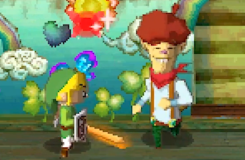
Tingle’s Rosy Rupeeland was released only in Japan and Europe, never making it to the USA due to lackluster sales. Surprisingly, the game was well-received among those who did play and review the game. You play as Tingle, a 35-year-old (and single) man lost in the world. Guided by the mysterious figure Uncle Rupee, Tingle fills a mystical spring with money and gain access to the wonderful Rupeeland, a paradise where nobody has to work. Along the way, hire body guards to protect Tingle – but from what? All may not be as it seems in Tingle’s quest for monetary gain, and Rupeeland just might not be so rosy after all...