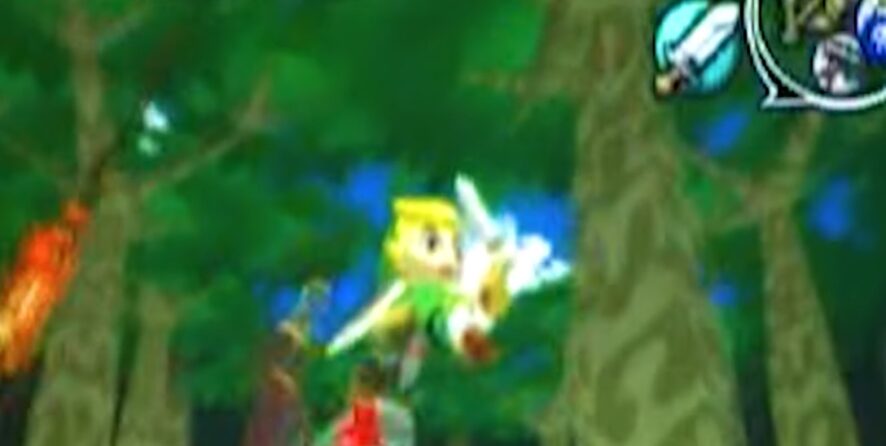
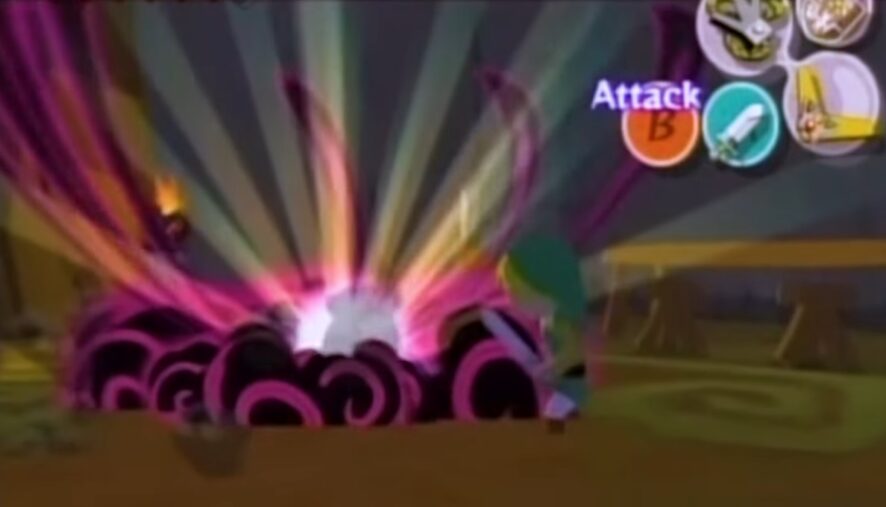
Long, long ago, in the age before HD video, a preview of The Wind Waker was shown at SpaceWorld 2001 and E3 2002 to hype up fans for the game’s upcoming release. The shown footage is, for the most part, similar to the game we know today. However, there are some notable differences, such as some animations and cutscenes that didn’t make the final cut and the completely unfamiliar user interface. The hearts and items UI looks totally different, and the Rupees and key indicators are in a different spot as well. On top of all of the visual differences, it seems the sword is mapped to the large green A button as opposed to the small red B button for both the 2001 and 2002 showcases. Apparently, this difference lasted very late into development, leaving us to speculate what the catalyst for the change might have been.
Despite most of the swordplay in The Wind Waker being centered around the B button, the flashy parry attacks do actually use the A button. In case it’s been awhile since you’ve visited the Great Sea, parry attacks are special attacks Link performs by hitting the flashing A button at the right time. Executing this attack usually entails Link performing some impressive gymnastic feat followed by a dramatic slash, dealing extra damage and even having bonus effects on some foes.

We see the parry attacks being shown off several times in the SpaceWorld trailer, though there are no flashy effects on the sword and no flashing A button. We do, however, see an indicator for the B button appear on screen right before each parry is executed, implying these attacks used to be executed with the B button. Given that the parry attack animations were a pretty significant part of this showcase, it’s possible the developers of The Wind Waker felt that the parry attacks should be more satisfying, and that switching the execution from the smaller B button to the large A button would give the action a slightly more grandiose feeling.
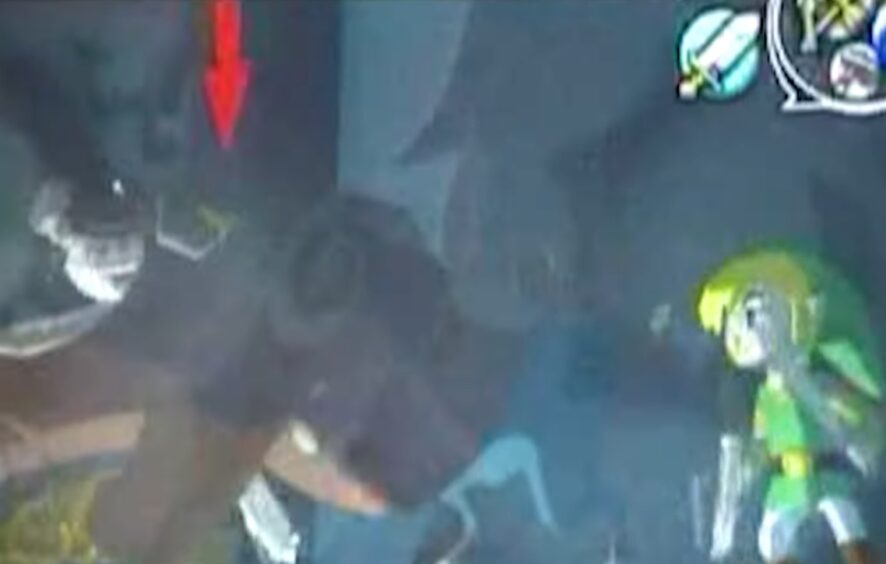
At the E3 2002 showcase, the sword still takes up the A slot, but now we see the B button pop up far more frequently, showing that the B button probably had all of the functionality that the current A button does. This means Link would interact with NPCs and other overworld objects using the B button in a manner similar to another significant GameCube title, Super Mario Sunshine, which was released earlier that same year. It’s possible that the team heard some negative feedback about the controls of Super Mario Sunshine and decided to make a last minute switch.
Based on the timing of these presentations, the button change was made very close to the release of The Wind Waker. It’s not necessarily a significant change — I think the end result would have basically been the same — but it required a UI redesign, so it’s not like it took no work at all. I can’t help but wonder just what convinced the developers of The Wind Waker to make such a change so late into development. I’ll add it to my ever-growing “Extremely Minor Zelda Questions That No One Cares About” list to ask Eiji Aonuma if I ever meet him.