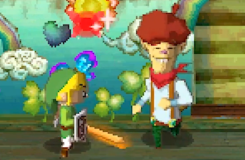
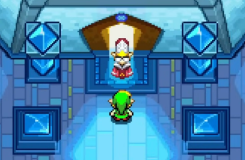
Nowadays, I would argue that the DS-era installments of the Legend of Zelda franchise are criminally underappreciated — most of all Phantom Hourglass — but if you had asked me about it many years ago, I would have been singing a much different tune. As a child, the two-screen puzzles that required me to keep my eyes on two sets of stimuli at the same time were an endless source of frustration. When it came to the DS hardware, Nintendo dug their heels in deep, heavily promoting the new and unique components that could be used in gaming, like the sleep sensor and touchscreen. This resulted in some of the most infamous roadblocks of Phantom Hourglass, like the map puzzle that most players solved accidentally because they got irritated and closed the game to come back to later. In retrospect, the DS Zelda titles are among those I treasure the most in the franchise, but for the longest time, they were definitely not remembered fondly.
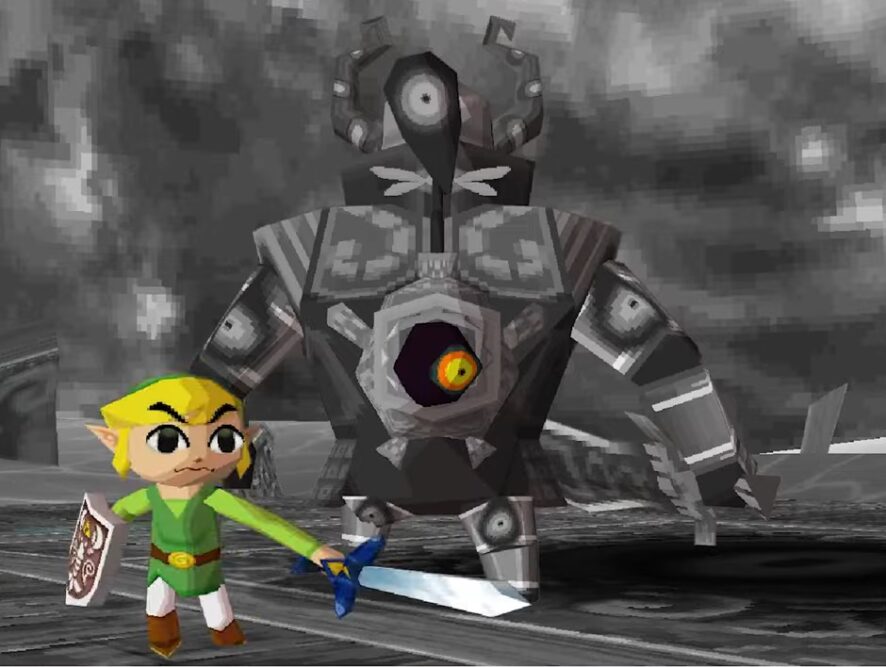
In fact, I was only reminded of my fondness for Phantom Hourglass when I revisited the game seven years after I first played through it on my poly-sheen red DS Lite. Much like our Hero of Time needed to spend seven years in the Sacred Realm before he was ready to wield the Master Sword, it took seven years of honing my stylus skills in PictoChat, Pokémon Ranger, and even Spirit Tracks to prepare myself for the final boss of Phantom Hourglass: Bellum.
For those of you who haven’t yet been initiated into the world of DS Zelda, Phantom Hourglass requires players to utilize the touchscreen for pretty much everything, from selecting equipment and drawing on the map to walking around and swinging the sword. Some actions are rather intuitive, like drawing a circle around Link to perform a spin attack. But in the final fight with Bellum, you are introduced to a new time-stopping mechanic called a Phantom Sphere, which is activated by quickly drawing an hourglass on your screen.

Even after all the time I had spent playing Phantom Hourglass, 10-year-old me was still not very adept with the stylus by the time I reached Bellum, and playing the game in a car driving through the mountains in winter only made matters worse. Despite my best efforts, I couldn’t even succeed at clearing the first stage of Bellum’s fight, let alone beating the whole thing. I struggled so much, in fact, that I finally ran out of patience (as I did with the infamous map puzzle) and decided to put the game down. After that point, Pokémon became my new fascination, so I moved on and left Phantom Hourglass behind for quite a while.
In 2018, I finished my first playthrough of Twilight Princess at the cost of trading in some of my older DS games, and it was at this point that I remembered Phantom Hourglass. I picked it up again that summer, and I was overwhelmed by memories of countless hours spent solving puzzles and conducting failed excursions into the Temple of the Ocean King. So many vivid memories, and yet so much missing as well. In the dark of my bedroom late at night, wielding my trusty stylus, I finally bested Bellum, sank the Ghost Ship, and felt the shock of Bellumbeck’s reveal through that forgotten 10-year-old mindset. After seven years of gaming and learning from my failures, I defeated my very first too-tough adversary.
Now, whenever I need a break from exploring every nook and cranny in Tears of the Kingdom, I’ll be looking back to the DS-era Zelda games to relive more of those fond memories and emotions, hopefully bringing back even more to share with all of you.