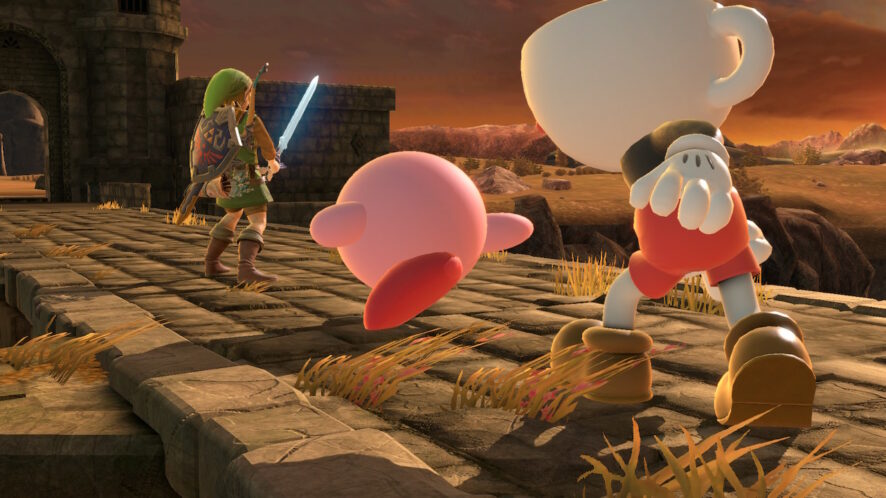
I love the Super Smash Bros. games — a lot. You could say I’m something of a fanatic. In particular, Super Smash Bros. Ultimate takes the prize as my favorite multiplayer game of all time, attested to by the insane number of hours I’ve logged since its release in December 2018 (I’ll give you a hint: It’s more than five hours and less than three thousand). I’ve been a regular tournament-goer in my city for the last two years, and a good number of my weekends are spent watching the top talent from across the world compete. But despite my love for the game, at the beginning of this year, I was starting to feel dissatisfied with Smash Ultimate. My two favorite characters, Kirby and Mii Gunner (in the Cuphead costume), had begun to feel stale. I had experienced growth in the past, but a plateau in my skill level that seemed to have no end was discouraging me from playing more.
I wanted to find a new love for the game. I could have picked a top-tier character like Palutena or Incineroar and tried to get easy wins, but there was a different yearning in my fingers. I needed a character I could be truly motivated to play; someone I could appreciate based on their moves and abilities in Smash Ultimate, but also on what they mean to me in their origin series. Since you’re on a website called Zelda Universe, you might be able to see where my mind went.
The Legend of Zelda is my favorite game series, with my favorite game in that series (bar Link’s Awakening) being Breath of the Wild. In addition, my preferred qualities in a Smash character include intricate projectile play and bursts of raw power; to me, the most obvious coalescence of these tastes came in the shape of Link, the Hero of the Wild. So, as a kind of New Year’s resolution in anticipation of Tears of the Kingdom (which is tantalizingly close now), I underwent a training arc with Link in Smash Ultimate. Here’s how it went.
Along the way, to bring you into my learning journey, I’ll do my best to decipher a few of the high-level terms or concepts I bring up. If you care to know more, the Fighting Game Glossary has a slew of definitions for Smash lingo which I’ve found very helpful in the past.
Link is a pretty unique figure in the Smash series, representing a hybrid of multiple character archetypes. He’s characterized by a motley assortment of projectiles and some very high-damage sword swings, boasting incredible versatility and an abundance of creative control. To compare him to fighters with simpler, more standard toolkits, his swordsmanship is heftier and more brutish than that of Marth, but his arrows and boomerang are a dash more complex in their interactions than the arsenal Samus wields. What truly sets him apart from the rest, though, is his Remote Bomb, a new addition to Ultimate to coincide with Link’s Breath of the Wild redesign, which can be detonated from anywhere and provides brand-new trapping opportunities and some advanced techniques.
The first thing I had to learn was his movement, as is so important in the platform fighter genre. Link isn’t terribly fast on the ground, so he can’t chase down opponents all the time. However, there’s something less obvious about his stats that belies a hidden power: the speed at which he falls after jumping is very high, which is an important factor to consider in the Smash series. With a high fall speed, jumping becomes less of a commitment, and you can mix up your opponent by making an offensive decision that they can’t react to. You could, say, feint attacking them with an aerial, but then return to the ground in an instant, ready to grab them out of their shield or use one of Link’s monumentally strong slashes. This easy mix-up makes a big difference to Link’s close-quarters efficacy.
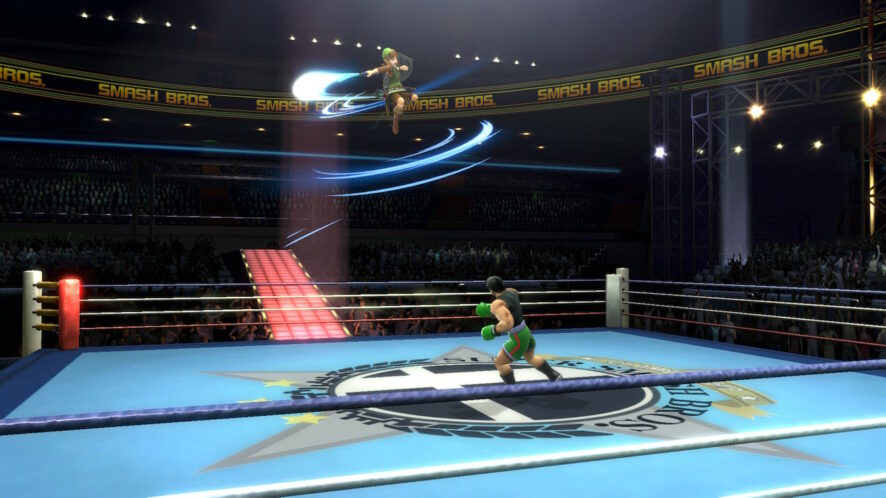
Another interesting aspect of Link’s movement is his recovery, which is the term used to describe returning to the stage after being knocked off. The Spin Attack, his up-special, is an excellent move with solid K.O. power and vertical gain, but it’s not his only recovery move. Here is where the first of Link’s critical advanced techniques comes into play. In most Smash games, when you’re holding an item in midair, you can perform what’s known as a Z-drop: Pressing grab or shield when the left stick is in the neutral position allows you to drop the item you’re holding, activating its hitbox on frame 1 and allowing you to perform another move instantly. With this technique, you avoid having to suffer a slower throwing animation. It’s useful in a variety of combos for nearly the entire roster, but Link’s bomb means he has access to this technique whenever he wants.
What does this mean for Link’s recovery? Well, when Link is too far offstage for his up-special to reach the ledge, he can simply spawn a bomb, Z-drop it, and instantly detonate it, sending him careening towards the stage. It looks goofy sometimes, and it causes you a little bit of damage, but taking that damage is a much better trade-off than losing your stock. Here’s what it looks like:
Side note: In full transparency, I must admit I’ve only pulled this trick off in a single real match, but boy, did it feel good. Also, it’s hilariously fitting that Link has a technique to blow himself up as a form of traversal, because speedrunners and advanced players can perform nearly the exact same trick in Breath of the Wild to go flying across the map. Crazy!
After a lot of time spent studying the moves, movement, and finicky tricks of Hyrule’s hero, I began the Goron Test of Will, which is to say, the trial by fire: playing Link online and in local tournaments. It started slow at first, naturally. I found myself making beginner mistakes like going too far offstage by accident, unfamiliar with the limits of my recovery. Many a time, I learned the self-destructive power of using Link’s downward aerial too low beneath the stage. It may be a very strong attack, but the animation takes over a full second to complete, by which point I would be at an irreversible depth and falling into the void below.
But it wasn’t all harsh realities. I learned that by facing my Spin Attack out toward the blast zone as I near the ledge, it’s possible to scoop up an opponent standing above me and send them flying to their death in a sneaky reversal. I became much more comfortable with my projectiles, as well. With the boomerang, you can jump forward and hit the opponent with it point-blank, which allows you to press forward and get an aerial attack or an airborne Spin Attack for a consistent combo. Trapping the opponent with the Remote Bomb became second-nature to me, dropping it off the ledge to hit them while they recover or throwing it high in the sky to catch them jumping over me. I could even leave the bomb on one side of the stage, knock them towards it from the other side, detonate the bomb to combo them back to me, and then hit them with a final aerial. The possibilities really were endless!

Slowly but surely, I climbed the ranks of Quickplay, taking each minor setback and laggy irritation in stride. At the same time, I was doing better in tournament, making it one or two sets in before dropping to the losers’ bracket. For anyone unfamiliar, a double-elimination bracket gives you two chances before you get knocked out. So even if you lose a round in the winners’ bracket, you can still play more rounds in the losers’ bracket, until you lose again.
I wanted to hit a major milestone in my progress with Link before the release of Tears of the Kingdom, and luckily in late March, I got the chance. I attended the monthly tournament I always go to, ready to show off what I’d learned. My first opponent was an Incineroar main, and while dispatching them didn’t take long, there were some close calls (Incineroar deals a lot of damage). Whew, one round done.
Next up was a Corrin player. The first game in our best-of-three set was in my favor; I made sure to play carefully around Corrin’s sweeping sword aerials and dangerous pin attack. However, my opponent then switched to Dark Pit, and proceeded to win the next game. Pit and Dark Pit have fast sword moves, a long-range recovery, pesky arrows, and a persistent reflector. These are all strong tools that Link can struggle to maneuver around. In the third and final game, we traded blow for blow, dealing damage and taking risky chances until we were neck-and-neck at very high percent, each of us on our last stock. One bad move would mean falling to the losers’ bracket early. It was tense, but I caught him jumping from the ledge with my forward aerial, and the game was over. Victory! My heart rate was pretty high for that one.
Now was the time to surpass a final hurdle. The friends I’d arrived with had already lost their winners’ rounds, but I was still going. If I could win just one more set, it would mark the furthest I’d ever made it into a bracket before losing. That was something I wanted very badly.
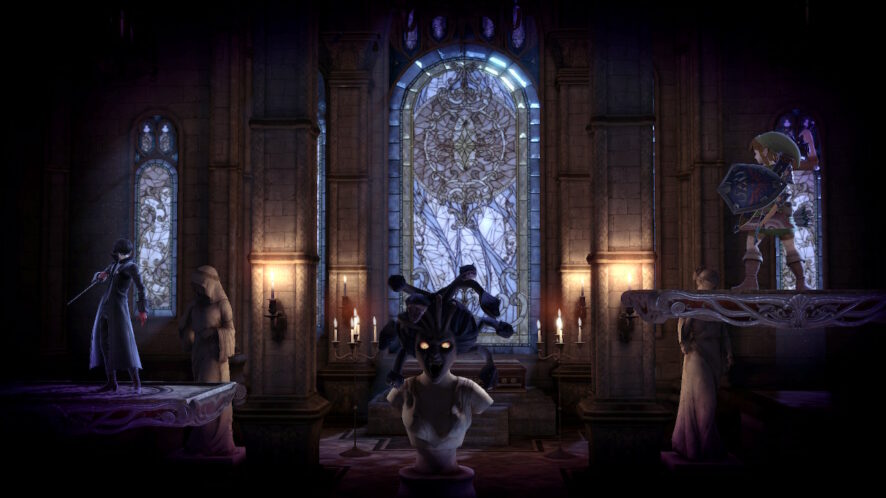
The third round of the winners’ bracket saw a Joker player rise to challenge me (Fun fact: they told me after the set that they used to play Link before switching mains). As expected, this was tougher than the two opponents that came before. Joker’s nimble movement, oppressive attacks, and Arsene x-factor made it so I was never in a safe position on the stage. It got even scarier when they knocked me offstage; Joker’s descending gunshots are a nightmare to endure when all I have is the Spin Attack to rely on for recovery, having not yet mastered bomb launching.
Despite the struggle, I took the first game by keeping my defense solid and looking for any weakness to exploit. I got some good damage and even took their stock by baiting out Joker’s counter and punishing the endlag. The second game began, but it was my opponent who took the lead. Every projectile I threw was easily absorbed by Rebel’s Guard, fueling their Arsene meter, so I had to remain patient. I relied more than ever on stealthy traps and I even employed the mix up I detailed earlier by using Link’s high fall speed to make my options ambiguous.
Late in the game, my opponent made a fatal mistake. They used a directional airdodge to try and escape to the ledge. Air dodges can be a lifesaver or a death sentence depending on where they’re used. In this case, I was able to chase him down with a dash attack, and suddenly I had a good lead. Earning my way back from a losing situation, I managed to win the game at last, claiming victory. I couldn’t believe it. I had won three sets back-to-back in the winners’ bracket for the first time in my competitive career. Of course, I lost the next round swiftly, falling to a ranked player in my area, but that didn’t matter! I accomplished my only goal, and I did it with my favorite character, Link. And as a bonus, not long after, I reached Elite Smash with Link! I truly felt that I had made progress to be proud of.
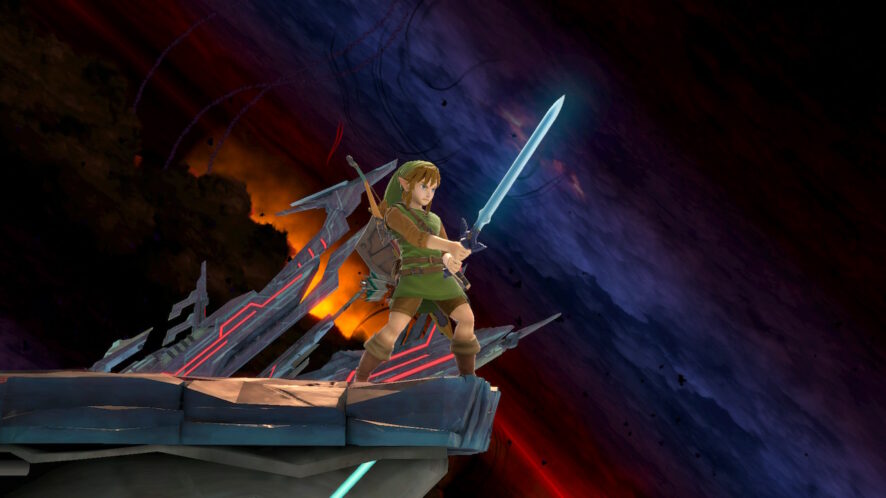
But as we all know, the road of self-improvement is never-ending. There are still untold heights to be reached with this character, plenty of mechanics to be explored, and techniques to be perfected. I may temporarily take a break from Smash Ultimate to devote my attention to Tears of the Kingdom, but when I return, I’ll have even more goals to reach and a stronger desire than ever to reach them.