When a video game takes place over a massive plot of land, it is almost essential to include some sort of method to quickly travel. This is the reason that fast travel or “warping” has been a staple of The Legend of Zelda, even all the way back to its original NES titles. Since then, it has appeared in almost every single title. And luckily for the fans, they have only ever improved. The Legend of Zelda has covered the full range of fast-travel mechanics, and all of them have been of high quality.
10. The Legend of Zelda (NES)
Potentially a controversial pick, but the factThe Legend of Zelda had any method of fast travel is beyond impressive. In this original title, Link plays a short song on his recorder to summon a tornado that will carry him around the 8-bit Hyrule. The tornado drops Link off at one of the eight dungeon entrances, which is plenty for this small world.
The big downside is that Link has no control over where he lands, as the game picks a random location. So, even though this is still a much faster way to travel, it can be annoying at times. The biggest bonus of fast-traveling in The Legend of Zelda is actually the safety from Hyrule it provides. It may not be perfect, or even close to it, but The Legend of Zelda has a functional and helpful fast-travel mechanic.
9. Link’s Awakening
With Link’s Awakening taking the number nine spot on this list, it must already be clear that The Legend of Zelda rarely screws up too badly when it comes to fast-traveling. Link’s Awakening uses a system of fast-travel tiles to take Link around the world. All Link has to do is simply step on one of these tiles, and a map will appear with every location that he has unlocked so far.
While the system works great for the game it is in, it is just simplistic. The game contains very few tiles, and Link must go out of his way in order to find them throughout most of the adventure. Plus, no in-world explanation is given as to why these tiles have their magical warping capabilities. There is absolutely nothing wrong with Link’s Awakening’s method of fast travel, but there is also little to make it unique.
8. The Wind Waker
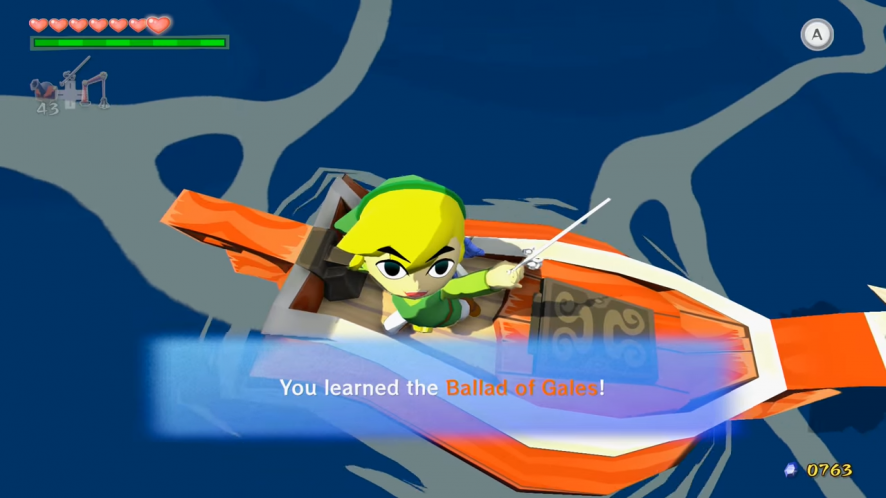
After a short battle with Cyclos, the god of Cyclones, the spirit gives Link the ability to summon cyclones that will carry him around the world. This method of transportation matches the character and creativity of the rest of The Wind Waker. Using the giant cyclones to get around the world is perfectly logical and fun.
However, there are not nearly enough places the player can access by using a cyclone. Having more locations available would have been really nice for the Triforce Shard quest, or when going for a 100% completion run. Fast-traveling in The Wind Waker has all the charm that is expected from the game, but the few places to travel to hurts the system’s functionality.
7. A Link to the Past
On a very similar note, A Link to the Past has an entertaining system that is not always very useful. After playing the Flute, an adorable bird picks Link up and takes him to one of the many fast-travel locations across Hyrule. But that’s the thing, it only works in Hyrule. Even though the Dark World is the exact same size as Hyrule, and much harder to traverse, there is no way to warp within Hyrule’s twisted counterpart. This makes the whole system unusable for the majority of the game.
But why is it at number seven, then? Because that bird who carries Link around Hyrule could not be any cuter. Link learns the song from the statue in Kakariko Village, then the bird breaks free from the statue and becomes Link’s best friend.
6. Minish Cap
The fast-travel system within The Minish Cap takes a little inspiration from a few of the previous games on the list. It takes the wind theme from The Wind Waker and works very similarly to A Link to the Past. In this game, Link uses the Ocarina of Wind and stone tablets named “Wind Crests” in order to dart around the world. All Link needs to do is play a simple tune on the Ocarina, and then a cute little Cucco will come to pick him up and take Link to a tablet.
It works well, but it does not do much to separate itself from the other systems of the series. Even though it is very similar to A Link to the Past in nature, the fast-traveling in The Minish Cap is much more useful, landing it just ahead of the classic SNES title.
5. Majora’s Mask
Majora’s Mask sends Link quickly across the world of Termina by means of the “Song of Soaring,” which allows Link to travel to any previously accessed Owl Statues that also operate as save points. It’s very simplistic, but functions extremely well. The warping being tied to the Ocarina of Time explains the magical part, and the whole bird theme is completely logical and gives the mechanic its own identity.
The biggest complaint is that there are still too few places to warp to. Majora’s Mask has a host of fairly large and hard-to-navigate areas, yet each one is only given a couple of bird statues. Although, this might be intentional to make the game more difficult.
4. Breath of the Wild
The fast-traveling system within Breath of the Wild is extremely well thought out and could not be more useful. A new fast-travel point is unlocked whenever Link discovers a Shiekah Tower or Shrine, which lets him immediately relocate himself to this previously visited location. The animation is also nice and simple, yet it never gets annoying to look at Link turning that gorgeous Shiekah blue color.
Because there are 120 shrines, and multiple towers, Link has plenty of places to travel to, but the options are never overwhelming. Plus, the DLC introduces the Travelers Medalion, which allows Link to select a single unique warp location anywhere in Hyrule. Breath of the Wild’s warping system always functions well, never takes too long, and there are almost too many places to travel to.
3. A Link Between Worlds
During the course of A Link Between Worlds, the young witch Irene becomes indebted to Link and promises to help him travel around the world. All Link has to do is ring his bell, and Irene will come and take him to his weather vane of choice. It functions perfectly, there are more than enough travel points within the game, and unlike A Link to the Past, it can be used in both Hyrule and Lorule.
The highlight of fast traveling in this game is Irene herself, who always has a brilliant or snarky remark to give Link each time she is summoned. This young witch truly steals the show with each appearance. The only downside is that Irene is captured by Yuga halfway through the game, meaning Link loses those encounters with her.
2. Twilight Princess
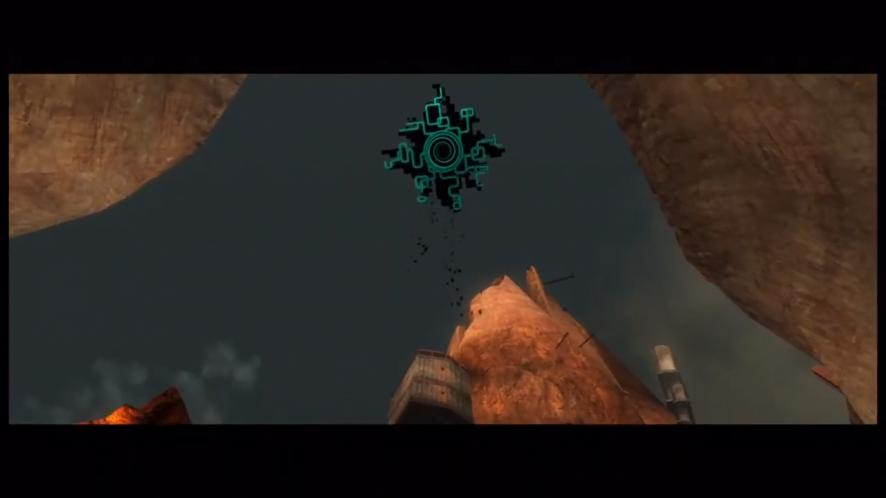
Twilight Princess has undoubtedly one of the most fascinating fast travel systems out of all of The Legend of Zelda. Link travels the world thanks to the Twili Portals around Hyrule, directly tying the system to the game’s theme. Every timeLink travels, he turns into the little Twili particles seen throughout the game and shots up into a portal.
When the portal first appears, it is corrupted by the evil magic of Zant, sending Shadow Beasts out to fight Link and Midna. In order to use the portal, Link must take out all of the spawned beasts. This method of unlocking fast travel is both creative and fun, but the system is also useful as well. There are plenty of portals scattered across Hyrule, making traveling easier than ever. The fast-travel system in Twilight Princess is one of the best in the series with its creative battles, connection to the theme, and offering the perfect number of portals.
1. Ocarina of Time
Once again, this is another nearly flawless fast travel system. Fast travel locations in Ocarina of Time are marked by the Triforce Pedestals in the Temple of Time and outside five of the major dungeons. To gain be the ability to teleport directly to any of these important locations, Link must acquire the Ocarina songs related to each one.
Having to learn these incredibly catchy tunes makes fast traveling more rewarding than any other Zelda game and adds a lot of character to each location. Ocarina of Time’s fast-travel system is absolutely timeless and actively improves the game through its existence.
Reina Proctor
Reina is life long Zelda fan who recently graduated college with a degree in Global Studies and the Japanese language. Her favorite Zelda games are Breath of the Wild and The Wind Waker. Besides Zelda, Reina is a massive fan of the Metroid franchise and is a coach of collegiate Splatoon.


 by Reina Proctor on December 10, 2021