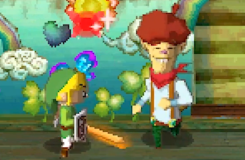
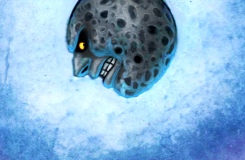
The Legend of Zelda timeline has always been part of a debate among fans. In 2011, Nintendo tried to put all of that arguing to bed by releasing their official timeline in Hyrule Historia, a compendium of artwork, beta materials, and trivia regarding the Zelda series. If anything, however, that muddied up the timeline discussion even more.
Before the release of the timeline, the assumption was that the games were released in relative chronological order, but that didn’t take the drastic changes that Hyrule seemed to go through into account. So, maybe each Link and Zelda were in different eras than the previous ones? Maybe they were set hundreds of years apart? Maybe we were just overthinking all of this and it ultimately doesn’t matter? While that last one may be true, we needed to know the truth!
We have the timeline now! It clears everything up (sort of). There are three timelines now? That was the plan all along, right? The timelines were thought out this whole time, just like the original Star Wars trilogy! Judging by some files found within Minish Cap, the answer is most likely no.
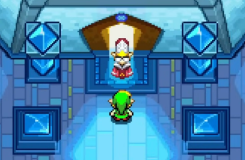
According to The Cutting Room Floor, a wiki dedicated to chronicling the cut content from video games, Jabun, Valoo, and the Great Deku Tree were supposed to be a part of The Minish Cap. Files were found in the game’s data that show the trio as stained-glass windows in Hyrule Castle. The spiritual stones from The Wind Waker were also included in an earlier version. Unfortunately, the reasoning behind cutting these inclusions was lost to time.

Stained glass featuring The Great Deku Tree, Valoo, and Jabun. 
Unused spiritual stones sprites.
Here’s the rub: According to the official timeline, Minish Cap is set hundreds of years earlier than The Wind Waker. The pearls make sense. They are ancient artifacts used to summon a trial for the chosen hero. However, the inclusion of these assets would have made the spiritual trio either time travelers or really old. Like, really old.

Of course, the stained glass was more referential than plot-driven, something we have seen many times in Zelda games. It’s essentially like the Mario paintings in Ocarina of Time or A Link to the Past. Just fun, self-referential Easter eggs.
It’s also a good reminder to not put so much stock in a timeline.