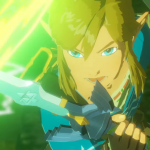
Despite my best efforts, despite all of my anticipation, and despite my love for all things The Legend of Zelda, I failed at every turn to make the original Hyrule Warriors have any lasting impact on me. When I first learned about the game from a teaser trailer on Nintendo’s YouTube channel, I was drawn into the excitement. It was something new, something no fan had seen before. In the trailer, Link put on a display that matched everything I and other fans had dreamed of seeing him do. It was as if every attack he performed was a Final Smash from Super Smash Bros.
Move forward roughly a year later, and I was met with the disappointing realization I would never love the game. I would never finish it, either. I tried, but I only made it a third of the way through before I popped the game disc out of my Wii U and put it back in its box forever.
Moving forward once again, about six years this time, I was given another surprise by Nintendo in the form of an unexpected announcement: There was another Hyrule Warriors game on the way, and this one was going to be a prequel to Breath of the Wild. It made sense. Knowing how the events before the start of Breath of the Wild took place, creating such an action-intensive game about that story could make for an incredible experience. “Could” is the operative word. I know 2014’s Hyrule Warriors was well received by fans and sold equally well, but none of the accolades helped me with the game. I was excited for this new game, but history had me err on the side of caution.
Then, I played it. Hyrule Warriors: Age of Calamity quickly became my favorite game of this past year. I’m sure the influence by Breath of the Wild played a big part in that, but what kept me invested was something far more important than the aesthetics, characters, story, and gameplay: It was the masterful execution of blending all of those elements together.
What is it about Age of Calamity that makes me like it so much more than the first Hyrule Warriors? It really is the execution, as I mentioned. Nintendo let this Warriors game behave like a Zelda game. Hyrule Warriors played like a game that was 70% Warriors and 30% Legend of Zelda. Age of Camality went in the opposite direction, and to great effect.
For my tastes, there is a lot that Age of Calamity got right that Hyrule Warriors got wrong. And I believe these improvements are worth exploring and praising.
Playing the part and playing it well
The biggest draw for the first Hyrule Warriors game was the number of playable characters. Nintendo continued to promote the roster up until the game’s release date. Everyone would be able to watch the fan-favorite characters bring their best to the battlefield. The problem was that their best was brought by way of a “make it work” approach. Link was a fun character to use, but as more characters joined the fray, it became clear that they were only present to grab the attention of fans, and their abilities were proof.
The characters and their attacks were gimmicks. This holds true for some of the characters in Age of Calamity, but Age of Calamity at least offers a balance. Every character they could think to add to the first Hyrule Warriors was a one-person army. And they added a ton of them, plus others through DLC. It was a joke. I don’t mean that as an insult, I mean they clearly wanted to make ridiculousness the whole point. It was a Warriors game, after all, so Koei Tecmo, who owns the Warriors franchise and were the actual developers of Hyrule Warriors, deemed the level of absurdity necessary.
I understand their approach, but I simply believe it was the wrong option. Zelda characters have more nuance to them than most other video game characters. They thrive off subtle complexity. Playing as them in a game that stripped them of their depth didn’t make much sense.
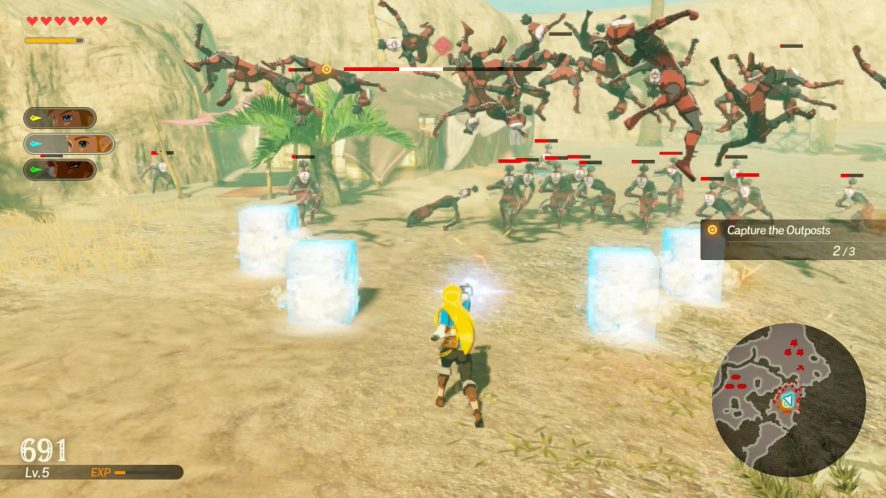
What Zelda is doing is ridiculous, but it helps make it clear that she is not a true fighter.
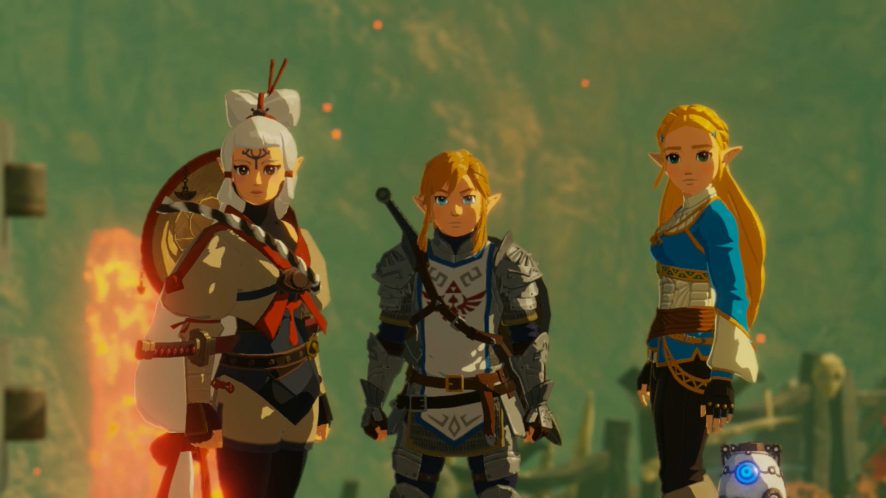
In Age of Calamity, the absurdity was mated with a much-needed purpose. Nearly every playable character has the need and logical purpose for being over-the-top. They are warriors fighting in a war. That makes sense for a Warriors game. And the characters that aren’t warriors, such as Princess Zelda, are pretty terrible. She is a true gimmick character in Age of Calamity. By adding a character that isn’t good at fighting at all, and by having her “cheat” her way to victory by using the Sheikah Slate as a weapon, the game brings to light how not all characters are meant to be genocidal Bokoblin slayers.
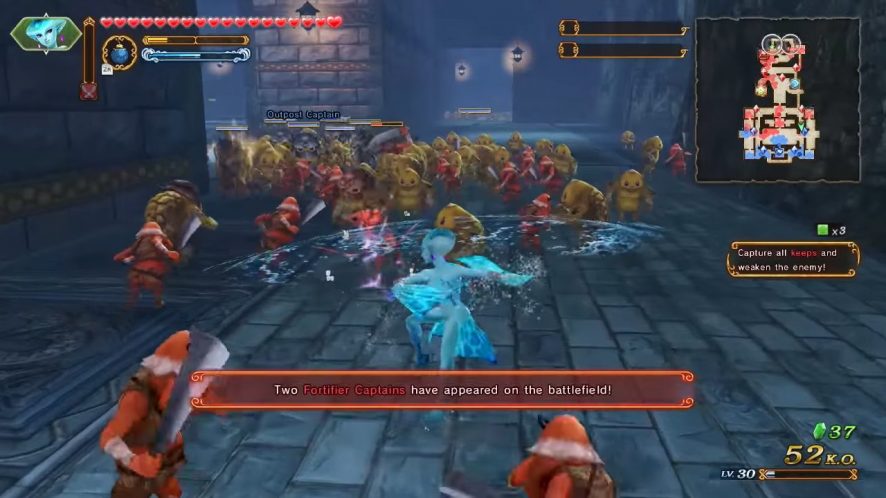
My first example of the characters not being properly represented in the first Hyrule Warriors is Princess Ruto. She was no pushover in Ocarina of Time, but she wasn’t a combat expert, either. They made the character fit her new role in Hyrule Warriors, rather than making the role fit the character. And the game did the same with many other characters. This modification of the characters was probably the greatest example of Hyrule Warriors resting too far on the Warriors side of the spectrum. Luckily, Nintendo saw the need to shift to the other side in Age of Calamity.
Their abilities often made me forget that these characters were from Zelda games.
A full experience built around the finer details
The rest of Age of Calamity flows forth from the decision to make the characters feel as appropriate as possible to the Zelda series. Locations, enemies, missions, and items all behave as if they are truly taken from the Zelda conventions and adjusted to the right degree to serve a different purpose.
The game’s locations, the levels, keep to the premise of Age of Calamity taking place in the same Hyrule as Breath of the Wild, albeit a hundred years prior. Familiar locations are visited, many of which look splendid and are full of life and purpose. Hyrule has yet to be destroyed, so these levels are our chance to see what the kingdom was like before the Great Calamity. It’s impressive, because these locations stay faithful to their original forms.
That couldn’t really be said of the locations in 2014’s Hyrule Warriors. Most levels were inspired by locations from canon games, but they weren’t, for the most part, actual reconstructions. They were modified imitations. Now, I don’t see this as much of an issue. Levels and characters are not equal to each other and don’t need the same treatment. Changing levels as needed is fine, but when a developer can find ways to let the locations remain organic to the world they’ve created, it’s a major success, and they pair beautifully with the game’s cast.
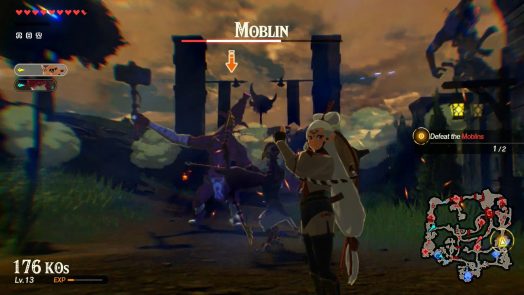
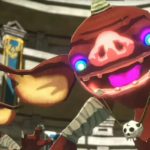
What was a surprise to me was how the enemies in Age of Calamity are more entertaining than the ones fought in Hyrule Warriors. As most fans know, Breath of the Wild didn’t offer much in terms of enemy variety, and that minimalist approach makes their expected return in Age of Calamity. The benefit of this is that the design philosophies and mechanics that made it fun to fight those enemies in Breath of the Wild also returns.
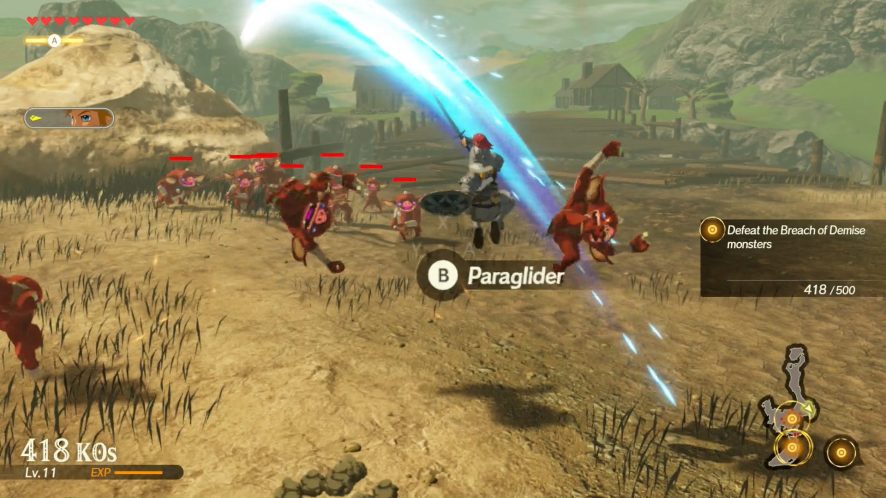
Being creative was essential to anyone’s success in Breath of the Wild when fighting enemies. We all needed to assess situations, use the environment to our advantage, pay attention to what the enemy was doing, and equip the right weapons at the right times. Enemies were often the same, but the interactions with them could almost always be different. The same holds true in Age of Calamity. Mixing up the combos, switching between characters, using the Sheikah Slates’ Runes, and dodging incoming attacks: These abilities brought back the best aspects of combat from Breath of the Wild and magnified their effectiveness for the sake of spectacle. It was a spin on what was already great.
You need to be alert and use all of your available to tools to succeed against Ganon’s forces.
In the original Hyrule Warriors, I can’t say I remember much from the enemies. They were just there, I guess is the best way to put it. That game put more of an emphasis on managing the enemies’ numbers for the sake of retaining control of the region, so the amount of action took priority over depth.
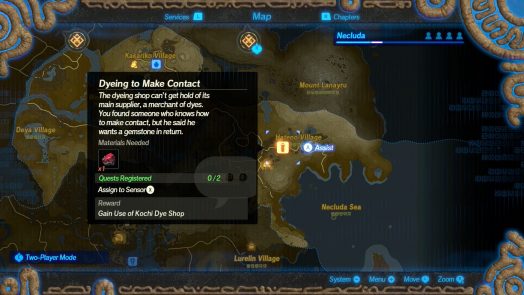
The more RPG-inspired parts of Age of Calamity, mainly the side missions, upgrades, and items, also do a good job of making Hyrule Warriors look like a practice run. Side missions offer more level objective variety. They give samplings of conventional Warriors missions, specific training sequences, and intense challenges. Upgrades, both to characters and weapons, allow the game’s difficulty to climb at a smooth and manageable rate. The leveling up of the characters also feels more personal than in Hyrule Warriors. And the items, though not game-changers, provide a connection to the Hyrule fans knew from Breath of the Wild. The is mostly due to the NPCs that either sell or need these items. They are reminders that you are part of a living, breathing world, one that is in peril and needs your help. In a funny way, inventory management gives that special “hero vibe” that all good Zelda games need.
There is an almost overwhelming number of side missions and quests to complete for the sake of useful and fun upgrades.
Every mechanical and functional component of Age of Calamity shows how Nintendo corrected the shortcomings of Hyrule Warriors. It might be a bit unfair to call them shortcomings, since the mechanics in Hyrule Warriors did what they were meant to do, but they were good Warriors mechanics. Zelda mechanics need to come first, and in Age of Calamity, the two franchises actually feel knitted together like a beautiful tapestry, but with most of the fabric coming from Zelda.
Bringing a memorable story to life
A game’s story is vital when the game in question relies on a strong narrative to pull the player into the experience. This can be true even for a game that builds its foundation on the premise of mindlessly slaying monsters. The latest God of War is a great example of that. The same importance is evident in every Zelda game, even if the game also carries the banner of the Warriors series.
When we played Breath of the Wild, we mourned the fall of Hyrule and the deaths of the Champions. But we never actually watched any of it happen. We learned of them as Link recovered his memories. It was all in the past, yet we still felt the sting of loss. There was a desire to see the land in its glory and Link’s friends in their prime, even if they were doomed. Age of Calamity offered this chance, and it needed to do it the right way.
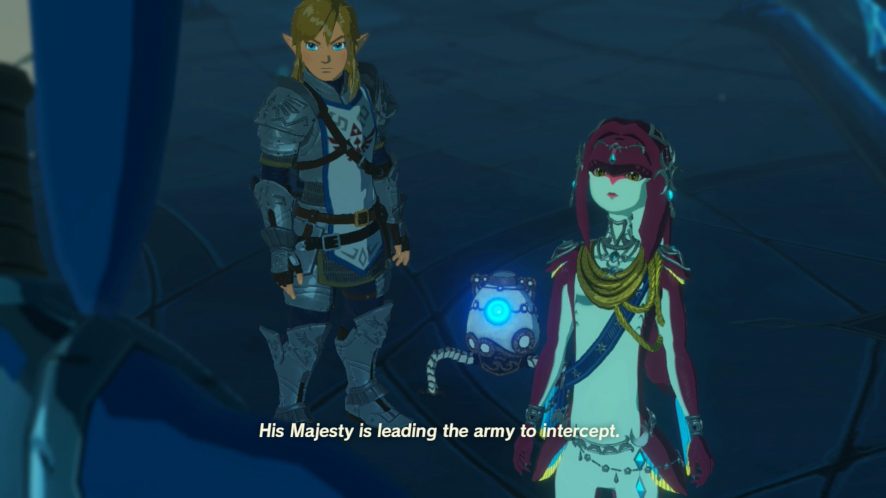
The games cutscenes brought the same intensity and impact as the ones from Breath of the Wild.
Age of Calamity is a Zelda spinoff game, but it’s also a Zelda story. That means it needs to be a good story. This requirement is where the first Hyrule Warriors lost me. Nothing can change my impression of that game’s narrative, that being of how it played out like fan fiction brought to life.
I suppose I liken it to fan fiction because of the simple fact that, in a sense, it was. It was the tale Koei Tecmo came up with to let a bunch of popular characters join forces. Again, it technically worked, but it made Zelda fit the Warriors mold more than it should have. There’s nothing about the story, about the characters, that can draw in the player in any meaningful way.
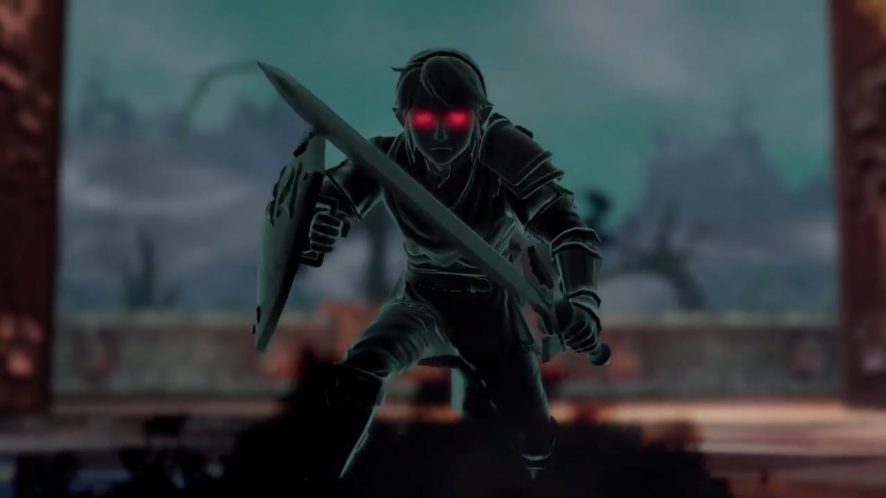
The only good option was to create a crisis where there usually never would be one, such as when Link succumbed to his arrogance, which ultimately led to a fight with Dark Link. It worked for the purpose of creating a fight, but in the context of Zelda, it went against the core of Link’s character design. No iteration of Link has ever faced that problem. The game changed the dynamic to make it work.
The story in Age of Calamity is designed to match the tone and charm of other Zelda games, Breath of the Wild in particular. This needed to happen, which is why it was Nintendo’s designers who oversaw the game’s script and story rather than having Koei Tecmo do it.
Age of Calamity worked around the needs of the narrative. It needed to tell a story about a pre-Calamity Ganon kingdom, and it needed to do so while simultaneously making the gameplay work. Hyrule Warriors did the opposite for the sake of having a large roster. It’s a serviceable story, but it doesn’t have the cohesion that Age of Calamity‘s story does, and it can’t measure up to any of the stories from other Zelda games.
Earning the approval of the eyes and ears
While not major points of concern for me, the visual style and the music of Age of Calamity are beneficial to the game’s mission. The sights and sounds are identical in style to that of Breath of the Wild, which comes as no surprise. Age of Calamity is meant to be a bridge between the events of Breath of the Wild and the history that took place before it. The need for familiarity is strong.
Every character design is the same (they even have the same voice actors and actresses, which is nice); weapons are identical to what fans remember; fields, deserts, and waterways carry the same allure; and the world map is essentially a copy and paste. When I play Age of Calamity, I know I’ve returned to Hyrule.
Nintendo did everything possible to draw us back into Breath of the Wild’s Hyrule.
The music and other audio have the same effect. There are some new songs added to the mix, but many of them are remixes of the tracks from Breath of the Wild with a Warriors flair. “Flair” is an important way to describe it. The songs never go too far off the path. They remain related to Zelda. The music in Hyrule Warriors was fun, especially as standalone tracks, but they went down the rock avenue a bit further than I think the Zelda series was truly comfortable going. Again, Age of Calamity offers a balanced blend.
The true age of warriors
Age of Calamity brought me back into the realm of fascination with the Hyrule Warriors premise. I wanted to love the first Hyrule Warriors, but I wanted to love a game that gave a new spin on the Zelda franchise with a mix of other games and genres. What I received was the inverse. The first Hyrule Warriors is a good game, but its purpose is something I can’t get behind.
The same cannot be said of its successor. I have been hooked on Age of Calamity. It may not provide the typical Zelda gameplay, but its first concern is to provide the Zelda experience. And it does so in splendid fashion.
Zac Pricener
Zac Pricener has been an avid Zelda fan for twenty years. The series has been a source of creative inspiration for him and fueled his desire to become a writer. That desire to write in turn led him to now serve as the Features Manager, Assistant Columns Manager, and Assistant News Manger for Zelda Universe.


 by Zac Pricener on December 7, 2020