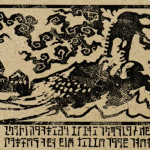
“This boy, who traveled through time to save the land, was known as the Hero of Time. The boy’s tale was passed down through generations until it became legend… But then, a day came when a fell wind began to blow across the kingdom. The great evil that all thought had been forever sealed away by the hero once again crept forth from the depths of the earth, eager to resume its dark designs.”
Time, a powerful yet delicate influence that flows throughout The Legend of Zelda franchise, ultimately enhances the depth of Hyrule’s history and creates the different timelines of our beloved kingdom. As a solid and recurring theme, it is hard to deny the impact and the role that time travel has played since the Sky Era. From the more obvious uses to the undeniably more hidden perceptions of time, we will take a how time manipulation has been used in two different installments in The Legend of Zelda series and how the abuse of something so delicate can lead to dire consequences.
The consequences of meddling with time
One of the most universally acclaimed video games of all time, Ocarina of Time had a core mechanic that could regularly bend reality. The us of time travel is was what kick-started the manifestation of time manipulation within the franchise by allowing us to age or regress the protagonist, Link, seven years in an instant, depending on the task.
After battling monsters in all sorts of environments, retrieving the three Spiritual Stones and playing the “Song of Time” in the Temple of Time, Link pulls the Master Sword from its pedestal to prevent Ganondorf from obtaining the Triforce. However, after falling into a trap set by the Gerudo King, Link is sealed away in the Sacred Realm for seven years, thus awakening as an adult to a very different version of Hyrule.
Subsequently, Link’s first pursuit in adult form is at the place where his quest first started, the Kokiri Forest. After rescuing Saria in the Forest Temple, Link learns that he can freely travel through time between childhood and adulthood by placing the Master Sword back into the Temple of Time’s pedestal. A very useful tactic for the remaining chapters of his adventure. After defeating Ganon in his adult form, Princess Zelda restores Link’s lost childhood by sending him back in time, which coincidentally created the famed timeline split.
From the moment we learn about Ganondorf, we know that he is obsessed with obtaining the Triforce and has an unhealthy lust for power. Despite these traits, Ganondorf never intended to use time travel to achieve what he wanted. This idea arrives later in the story and starts with a panicked princess on horseback in possession of a fabled ocarina.
For someone who possesses the Triforce of Wisdom, you would think that Princess Zelda would know better than to mess with the forces of time, even if unintentional. Unfortunately, Ganondorf saw not only a window of opportunity that he could use for his own gain, but he also managed to manipulate Zelda’s plan and use it for himself. Princess Zelda never intended to use time travel in her original plan to stop Ganondorf, but by using the Ocarina of Time, she opened Pandora’s box and a gateway to Hyrule’s precariousness future.
Once Link pulls the Master Sword from the pedestal and is left in the Sacred Realm for seven years, I cannot help but imagine a ‘tug of war’ scenario where Ganondolf is pulling from one end and Princess Zelda is pulling from the other, and in the center, there is time. At this point, both good and evil want to use it to their own benefit, but no matter the side, time is not something to be meddled with and can lead to serious complications.
Although Link does eventually triumph over Ganondorf with the aid of time travel, it is apparent that Princess Zelda learns from her mistakes. Despite her noble intentions, her plan had too much room for error and created a way for Ganondorf to manipulate history. Unfortunately, the damage created by time was irreversible, as shown from the creation of the time paradox, but it would be a valuable lesson passed down to the future generations of Hyrule. Ganondorf, however, mirrors this lesson in a more ominous way by almost obsessively clutching at the one thing that went in his favor, the abuse of time, to ensure his inevitable return.
The official establishment of multiple timelines in the Zelda universe was a direct result of Princess Zelda’s actions at the end of Ocarina of Time. One timeline follows what Link does after he is sent back in time to warn Princess Zelda about Ganondorf, leading to the events of Majora’s Mask, and the other follows Princess Zelda after she sends Link back, leading to the events of The Wind Waker.
Time’s continuing influence
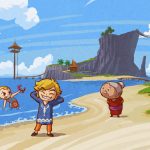
Set hundreds of years after Ocarina of Time, Link’s adventures on the open sea of mystery in The Wind Waker follow the adult timeline in which Link defeats Ganon and then disappears, leaving Hyrule to the fate of essentially becoming a human fish tank. With an array of references and Easter eggs, The Wind Waker delves into a sense of familiarity while incorporating its own legacy.
Maintaining the core component that Ocarina of Time is famed for, time manipulation can still be found within The Wind Waker in the obvious form of the Master Sword. It is no secret that the Master Sword found in The Wind Waker can still control time, as seen when Link pulls it from its pedestal and causes Hyrule’s unfreezing, but this is not the only moment where the influence of time is found.
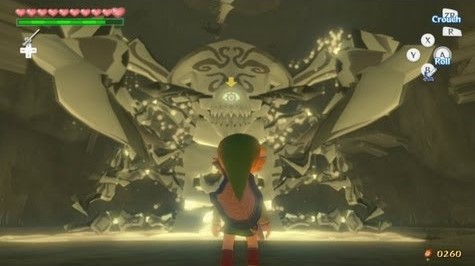
When we first enter Ganon’s Tower, Link must go through four trials in order to light up the four symbols seen on the main doors so they can be unlocked. Each one of the four rooms has themes similar to the dungeons completed throughout the game, but it is the boss fights at the end of each room that I found to be a subtle nod to the flow of time.
Link must face Gohma, Kalle Demos, Jalhalla, and Molgera again in memory flashback battles, a concept that is mesmerizing when put to thought. As soon as Link walks through the door to a boss, things become a bit wavy, and I am not just talking about the screen effects! As if he is transported back in time and only armed with the items that he had equipped at the time of the original battles, Link must face his journey’s perils once again in order to save Princess Zelda and Hyrule.
I am intrigued by the motive behind Ganondorf’s reasoning to incorporate the element of time travel into this stage of Link’s quest within The Wind Waker, and it certainly raises more questions than answers. Was Ganondorf inspired by previous events in Ocarina of Time to include a time travel twist in his tower, thinking that he could succeed if he used Princess Zelda’s tactics from another event in history? Was he trying to demonstrate that he had the power to do so? Or is it a more sinister notion to ridicule the previous Princess Zelda and how her actions split the world of Hyrule into three realities, each with their own hardships?
The flow of time is a narrow path
Although it is a common theme found within the various worlds of fiction, time travel can be a difficult concept to master despite the high potential for universal appeal. From movies to books to video games, everyone wants to put their stamp on time travel, and while the appreciation is there, the bar is often missed.
However, I have always found that The Legend of Zelda series does a beautiful job at focusing on the uses and consequences in a variety of time travel forms while adding to the complexity of Link, Zelda, and Ganondorf’s intertwined destinies, even when least expected. More importantly, without time travel we would not have an abundance of The Legend of Zelda installments that are linked with one another and incorporated into ever-changing timelines where any direction is possible.


 by Charlotte Spiers on July 6, 2020