If you ask me, the first dungeon of a linear Zelda game is the most important. It introduces you to how puzzles will typically go; they’re never overly difficult and they establish an idea of how combat encounters will typically be presented in that particular game.
I find that a good first dungeon sets all the precedents and gets you excited for not just overcoming its challenges, but whets your appetite for the more complex challenges later on.
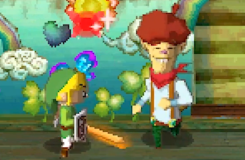
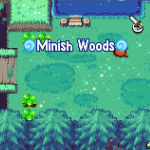
As you probably guessed, Deepwood Shrine from The Minish Cap is one of my favorite first Zelda dungeons. In order to even access it, you have to become a Minish, where Link becomes super tiny. He wanders into the Minish Village where he learns he needs to find the four elements and, conveniently, one of them is in the shrine behind the village proper.
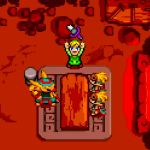
As you enter the dungeon, a lot of the puzzles are your standard Zelda fare, such as pushing the statue out of the way, which is how the game tells you to try and push things around if you can. Once Link enters the main room, however, a humongous barrel can be seen in the center of the room, tied together by some vines.

If Link enters this barrel and runs along the edges, the barrel will spin around and will change where various entrances are located. Not only does this barrel make for a great setpiece — which already makes it stand out as it is — but it shows off the graphical capabilities of the Game Boy Advance in a really cool way. This has the added effect of not just being a cool puzzle idea but also leaves a good first impression on the player in terms of aesthetics. Zelda games always do a great job of not just having something be aesthetically pleasing, but also dynamic within the world itself, and this simple barrel shows that off well.
Moving on through the dungeon, Link encounters some mushrooms which, when pulled, will fling him across gaps and water, which he can’t yet swim through. He also later finds the coveted dungeon item, the Gust Jar. With this, Link can now be rid of all the pesky cobwebs that blocked his path prior.
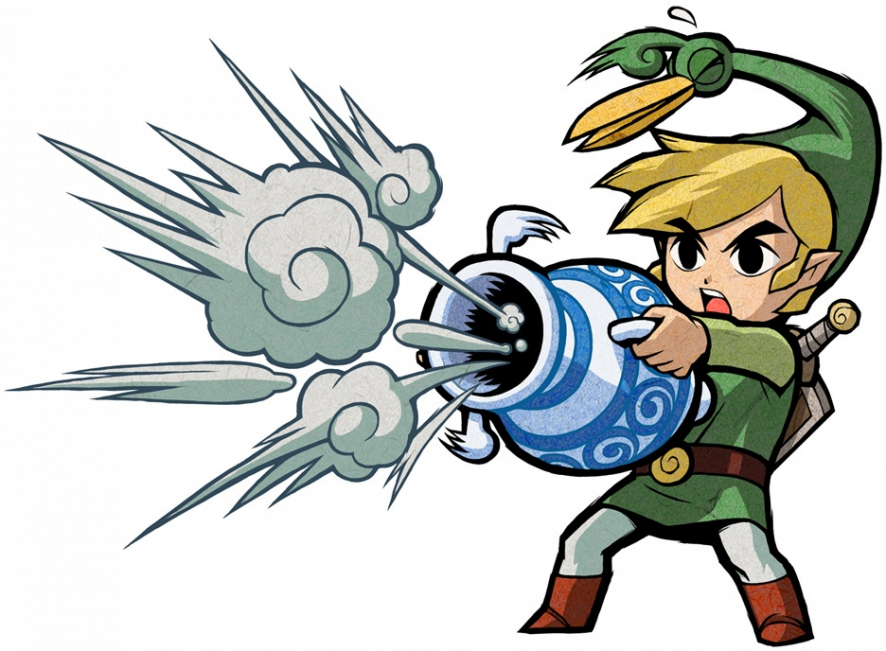
The creativity doesn’t stop there, however, as the Gust Jar proves to be a very handy item in many ways. For one, Link can finally attack the Puffstools, which were previously impervious to Link’s sword. He can use the Gust Jar to pull objects towards him, including the aforementioned mushrooms, which he will grab onto and will be pulled towards, allowing for more mobility and some handy shortcuts. When Link reaches the bottom floor, he must ride a lily pad across some water which, with the help of his handy-dandy Gust Jar, he can steer by using air to propel himself in any direction he chooses.
Finally, the dungeon comes to a close, and Link enters the menacing door at the end. We are greeted with a rather silly cutscene as a simple Chuchu is minding its own business, bouncing around – -but then bounces right on top of the shrine and drips down inside, right in the room where Link is standing! Normally a rather weak enemy, Link must now face this simple enemy as a Minish, which suddenly becomes a daunting task!

This boss was such a delight to see when I first encountered it. The reality of how small you are really hits home here, and once again shows off the immense creativity the game (to make a pun) oozes. Using the Gust Jar to suck up the bottom part to make it fall down so you can slash his head is really cool, and it makes for a simple-yet-fun first boss.
The Deepwood Shrine has a lot going for it. It’s a great introductory dungeon to teach you the game, it has a cool item that would eventually be a staple to the Zelda franchise, and it shows off how much creativity the team at Capcom had when they made this gem of a game. Above all else, it gives a great sense of adventure as you explore it, and once it’s finished, it makes you excited to see what other grand adventures yet await Link in the world of The Minish Cap.