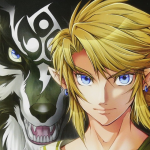
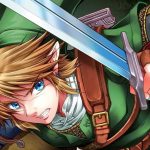
In the past, a manga adaptation of a The Legend of Zelda video game would be lucky to even have two volumes to tell its story. Those that were so fortunate were looking at the halfway point when their second book began. But with Akira Himekawa’s adaptation for Twilight Princess, the adventure is just getting started as readers open the second volume.
The first book followed its own path, deviating quite heavily from the narrative seen in the game’s introductory sequence. Most of the key plot elements that fans would be familiar with were there, but with more substance to them, as well as a fair amount of new wrinkles to the story. As Link (now in wolf form) awakens in the dungeons of Hyrule Castle, the manga begins to follow a plot that is much closer to the video game’s narrative than what we saw in the first volume.
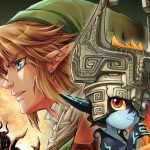
This means that the story doesn’t have too many surprises for any fan who played the video game, but it remains a compelling tale. As Volume Two visualizes the happenings and events from the GameCube/Wii classic, the Twilight Princess manga regularly honors its source material. There are numerous references to specific moments in the video game. The room with the spiral staircase that Link and Midna make their way through in Hyrule Castle’s depths could have been pulled straight from the game disc, while one panel is an exact recreation of the camera shot when Zant and two Shadow Beasts enter Princess Zelda’s throne room during his attack.
The story in Volume Two doesn’t have too many surprises for anyone who played the video game.
When Link meets the Light Spirits Ordona and Faron, some frames are illustrated identically to the imagery in the original cutscene, right down to the angle, position of the characters, and layout of the environment. Ordona’s and Faron’s speech bubbles are bordered in hazy shading that eventually gives way to a soft white center, conveying a sense that light embraces their words just as it surrounded their text in-game. Other, smaller nods, like the minuscule Fairy of Winds inhabiting the Gale Boomerang, and a man ― who very likely is Auru ― advising a very young Zelda (Auru is noted has being Zelda’s childhood tutor in the Japanese version of Twilight Princess), should also be appreciated by fans.
The franchise’s titular heroine is featured in a fascinating flashback where the adolescent princess looks back through time to witness the execution of Ganondorf at the hands of the Sages, as well as the King of Hyrule. Things don’t go awry in this reimagining of the video game’s memorable cutscene, however. In fact, showing that the opening volume’s heightened violence was no aberration, Ganondorf’s banishment from the world of light is a gruesome spectacle.
Additional scenes like this would have gone a long way to providing Zelda with some depth. Aside from that prologue, her role in Volume Two is no different from the video game. She’s a wise, mature leader, but she’s without agency, locked inside her castle and only able to offer Link her wisdom and her faith. There’s still plenty of time for her role to be expanded, but with how many other parts of the narrative have been enhanced in the manga adaptation, you wish Zelda could have been given a fairer shake from the start.
With how many other parts of the narrative have been enhanced in the manga adaptation, you wish Zelda could have been given a fairer shake.
Link, on the other hand, is allowed the opportunity to evolve into what might be the most complex iteration of the character. Previous manga adaptations by Himekawa portrayed him as being far more expressive and possessing a bigger personality than in the video games; the Twilight Princess adaptation achieves that and soars past it. Volume Two continues to explore Link’s reactions to the incredible event he finds himself in, which usually manifest in a realistic blend of determination and panic. Link intends to give it his all in saving his friends and dispelling the darkness that threatens Hyrule, but he’s also terrified of what looms before him. With his tragic past compounding the setbacks he’s already faced, he struggles to compartmentalize his loss and his duty.
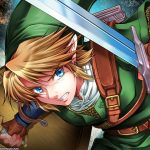
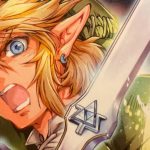
He spends the majority of Volume Two in his wolf form, which is undoubtedly the highlight of Himekawa’s fabulous art. The detail in his fur’s coloration and its texture patterns are stunning. When in conversation, his face is very expressive and carries a variety of emotions like those of any human character; when he’s battle, he’s fearsome and fights with feral ferocity.
“WHEN I WAS A HUMAN, MY HEART WAS FULL OF FEAR AND HESITATION… BUT NOW IT’S SUDDENLY FREE. I’M OVERFLOWING WITH STRENGTH.” – LINK
Readers who felt that the opening volume in the Twilight Princess manga was a little on the slow side will be pleased to see that the action ramps up in Volume Two. Link and Midna contest with several different foes over the course of this sophomore entry, including Shadow Beasts, Shadow Insects, the corrupted Ook, and even the monstrous Diababa. That recognizable boss enemy from the video game is another visual highlight for Volume Two, at least for the brief time that it’s actually on the page. Link’s encounter with the plant-like titan doesn’t last very long, and it isn’t exactly a riveting battle.
But in Link acquiring his first Shadow Crystal and bringing peace to Faron Woods ― all while clad in the iconic garb of the hero ― Twilight Princess’s second volume closes on a strong note. The satisfaction of triumph doesn’t linger for Link, who is still fighting a wave of doubt that he can truly be the hero Hyrule desperately needs. With plenty more story left to be covered, the Twilight Princess manga foretells a lot of maturation for the young hero, and a lot of obstacles to overcome that will help him build it.
Score
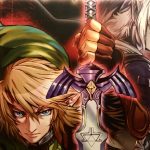
The action ramps up in Volume Two, with fabulous art that appears to have been ripped from the game in parts.
8/10
Jeffrey Pawlak
Jeffrey Pawlak is the Features Director for Zelda Universe, and has been a member of the website's community for more than 20 years. He is also a high fantasy author and an aspiring comic book artist.


 by Jeffrey Pawlak on June 21, 2019