Villains are essential ingredients to successful fantasy stories. They move the plot along, keep valiant heroes busy, and make us sit on the edge of our seats. Villains in video games do even more; they give us goals and promote healthy feelings of confidence after we mow them down in epic boss fights.
Few other villains in video game history accomplish these tasks as well as Ganondorf does in the Zelda series. He first appeared in 1998 but was mentioned in 1991 in Link to the Past. Unlike other villains, Ganondorf’s abilities are not defined by a single niche. Instead, his powers revolve around his motives, personality, and being a well-designed character.
Multiple generations of Links and Zeldas come and go in the series, but Ganondorf remains as the same person, generally speaking. Thanks to the preservation abilities of the Triforce of Power and the Sacred Realm, Ganondorf gets the unique position of living through more titles than arguably any other character in the series. It’s no wonder the Zelda timeline topic is inevitable when the King of Evil is brought up in conversation. Here’s a look at how Ganondorf has been impacted by the timelines in the past 22 years.
Decisions and consequences
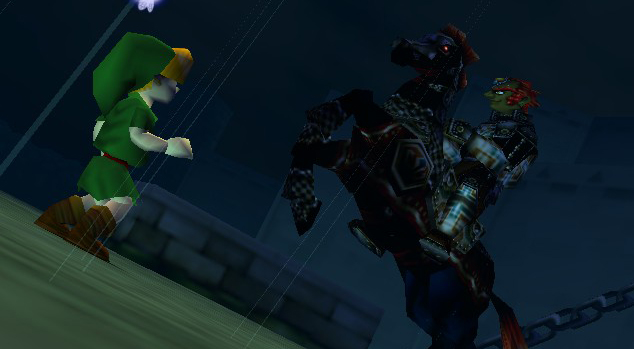
To understand how time affected Ganondorf, it’s best to start from the beginning of his history: Ocarina of Time. Many players know the story well. Ganondorf, King of the Gerudo Thieves, is granted an audience with King of Hyrule to forge a peace treaty after years of conflict. But the proposed alliance was a ruse. Ganondorf betrayed the king and attacked Hyrule Castle to claim the Hylians’ sacred treasure, the Triforce, for himself. Though he succeeded in granting his wish to rule Hyrule entirely, Ganondorf could not keep the whole Triforce because of the evil motives in his heart. The relic split away into three pieces as a fail-safe, leaving behind only the Triforce of Power, which represented the virtue he valued most. The Sacred Realm, which housed the Triforce, now reflected the image of its new master. It transformed into an Evil Realm full of monsters ruled by Ganondorf. Even with these conquests, it wasn’t enough. Ganondorf was still not satisfied. He wanted the complete Triforce and dominion that spanned not just Hyrule but the whole world.
Sounds like another day in the office for a typical dark lord villain, right? Well, there’s a little more here than what meets the eye. It turns out that Ganondorf is not simply the “perfect storm” villain. The core of his character arc from Ocarina of Time onward lies in the consequences of his decisions. He broadcasts the worst of humanity through himself, and yet he expresses admirable traits we can relate to. In a translated 1998 interview with the original Ocarina of Time staff, Satoru Takizawa had conceived Ganondorf as “a crooked and complex thief, who was basically an all-around abominable human being,” but the design team and script director corrected him. They stated that was “not the case,” and that Ganondorf had “some good parts” in his younger years. The end result was a charismatic and brilliant Gerudo king who carried great potential to be a benefit Hyrule, but he fell to his selfish greed and pride. The Triforce of Power simply magnified it.
It is suggested that Ganondorf once had “good parts,” but fell by his evil desires over time.
If there was ever hope for Ganondorf to rectify his ways, he would have done so in Ocarina of Time. Princess Zelda reflects this in the game when she says, “Ganondorf…pitiful man. Without a strong, righteous mind, he could not control the power of the gods….” A sobering remark from the Bearer of Wisdom. To her, a wicked mind was a weak mind.
Formidable as the Hero of Time was, Ganondorf’s arrogance led him to underestimate Link, which eventually led to the evil king’s defeat. But the Triforce of Power could not discern the morals of its master. In a last-ditch effort, Ganondorf used it to collapse the tower he built onto Link and Zelda, and when that didn’t work, it revived him. His injured pride festered into seething hate that transformed him into the piglike beast Ganon we know today, setting the stage for a darker story: the Adult Timeline.
The dark designs of revenge
In Ocarina of Time, the natural flow of time split in two when the Hero of Time pulled the Master Sword from the Pedestal of Time.Link could travel back and forth between the past and the future with the power of the Master Sword in his adventure. Hence, the reasoning behind the Child and Adult timeline theory. After they sealed Ganon away, Zelda returned Link permanently to the past to regain his “lost” childhood. Though she knew that Ganon would eventually break free, she closed the timelines from each other in an effort to repay the costly mistakes she made with the Sacred Realm as a child. Perhaps she felt compelled to satisfy a debt to her dear friend for sacrificing his life — and literally his time — to save her kingdom.
Little did Zelda know, she had just made another terrible mistake.
The consequences didn’t happen right away. The kingdom thrived and Hyrule Castle was rebuilt. Commerce was restored to its full splendor. Life in Hyrule resumed as normal.
That was when Ganon returned, and with a vengeance. To make matters worse, Hyrule was completely ignorant to the timing of his inevitable onslaught.
Not knowing that their hero had moved to another reality, the Hylians did all that they knew to do. Their desperate prayers worked, or they seemed to at least. The land of Hyrule flooded, creating the backdrop for the first game in the Adult Timeline, The Wind Waker.
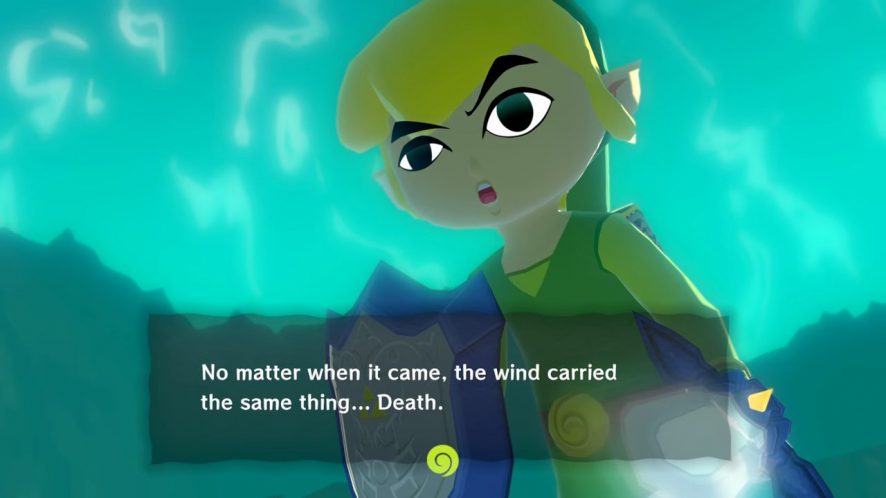
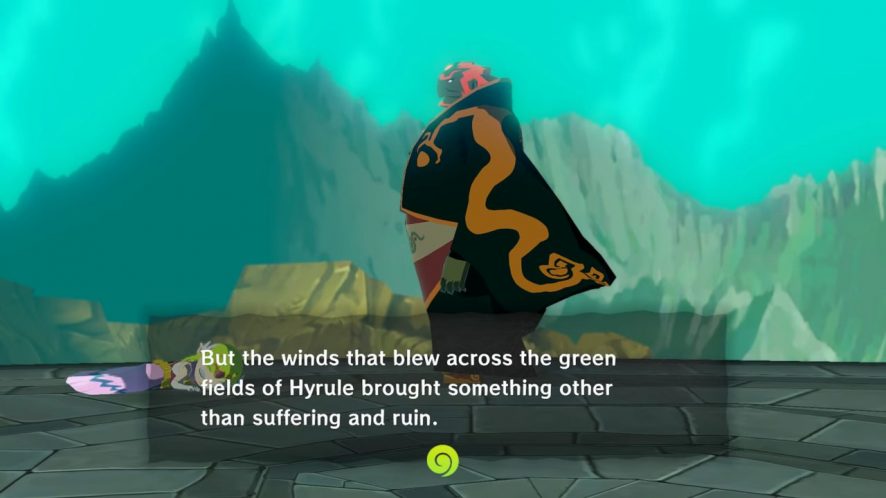
Each Zelda game is designed with its own self-encapsulated story. The Wind Waker does one better — it tells its own marvelous narrative and it picks up where Ocarina of Time left off, creating a seamless transition between the two that’s a rare treat for the series. This is where Ganondorf’s character arc shines in the most chilling way.
Ganondorf’s dark obsessions with the Triforce justify little sympathy, if any.
At the end of Ocarina of Time, Ganondorf vowed to hunt down Link and Zelda’s descendants the moment he broke free. And boy did he keep that promise in The Wind Waker. Every time Link encountered him, Ganondorf attempted to get rid of the budding hero in some way or another, and that’s not counting the long-distance attempts. Whether the Hero of Winds actually shared the same blood as the Hero of Time or not, it didn’t matter. The fact that he wore the green tunic alone made him a target to Ganondorf.
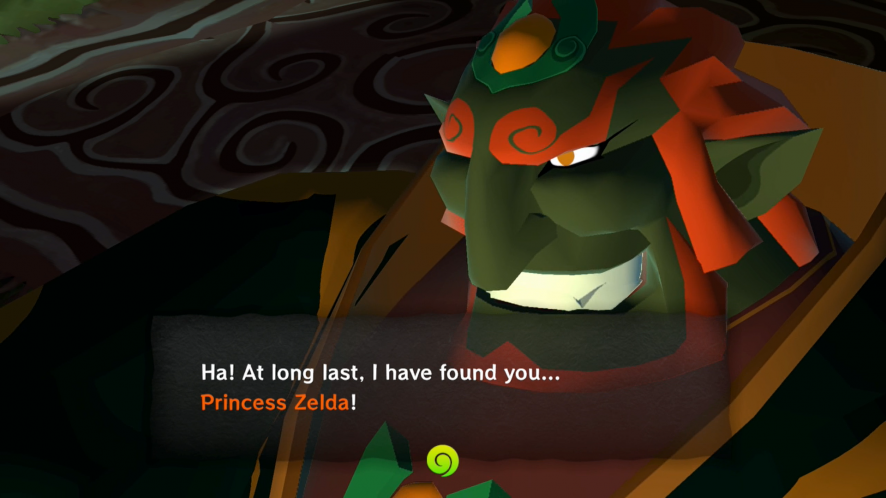
Obsessed with the glories of the past, Ganondorf searched high and low for the pieces of Wisdom and Courage to finally complete his dark desires. He looked for Wisdom first, knowing that the Princess of Destiny’s descendants would have it, which is why he kidnapped Tetra. Once he realized Link was a candidate for the third piece of the Triforce, all he had to do was wait. The goal changed from annihilating the hero to baiting him.
The next time you play The Wind Waker, note the way the Ancient Hylian speaking characters mention Ganondorf by name. They consistently call him Ganon in the English text, though he never strays from his Gerudo form for the entire gameplay. The Wind Waker is the only current canon title where this occurs. The preservation of Ganondorf’s form magnifies the monstrosity behind his actions as a man.
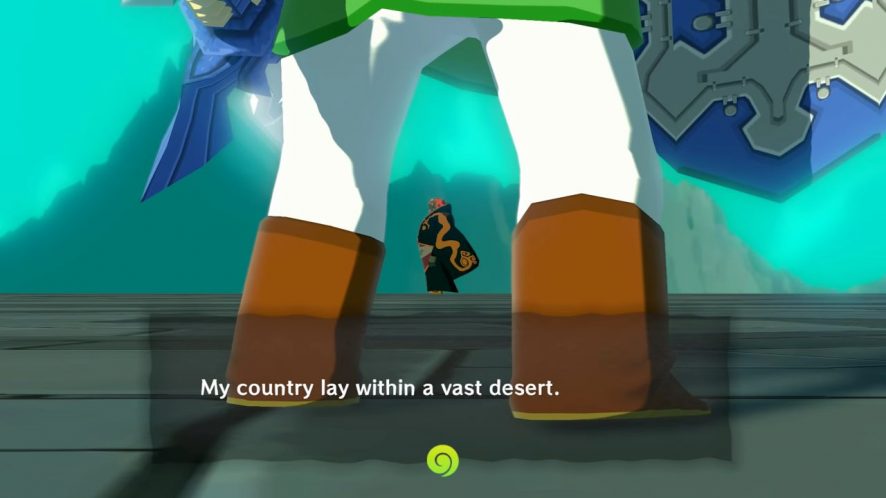
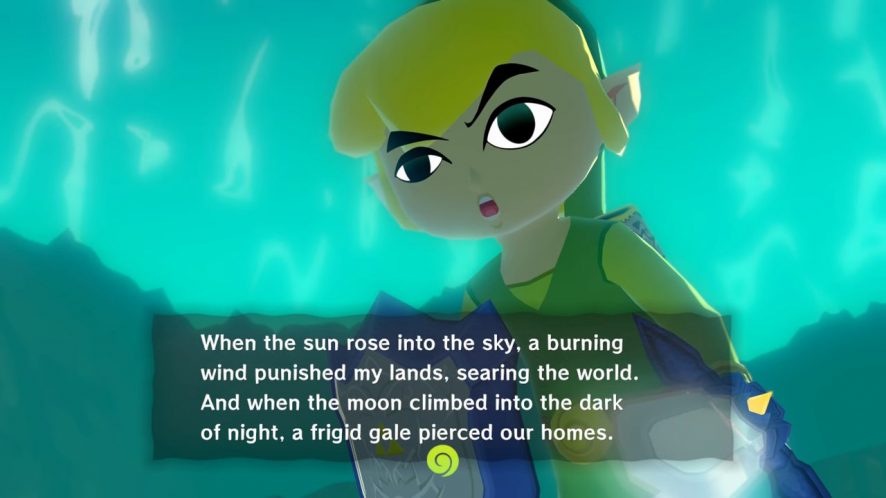
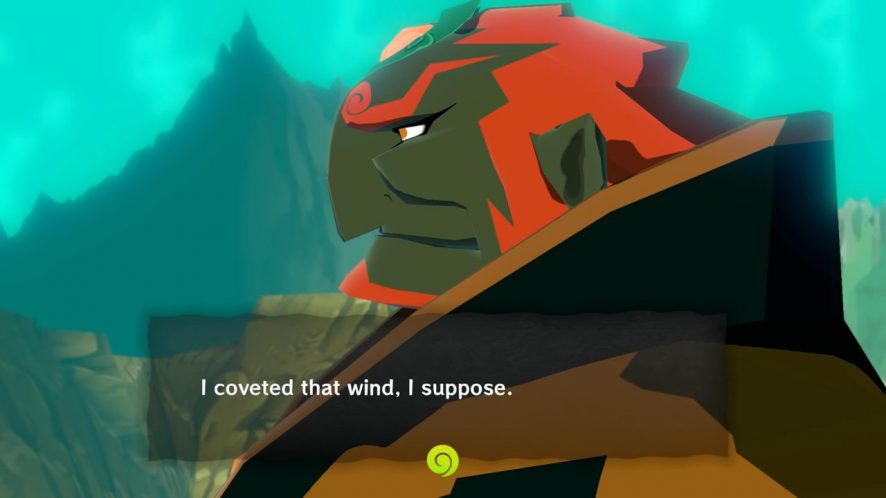
Some Zelda fans sympathize with Ganondorf in The Wind Waker, claiming that the harsh life in the desert had motivated him to obtain the Triforce to benefit his Gerudo people. They get this idea from his statement moments before in the final battle.
Do his ends justify the means, then? Hardly.
In fact, the notion to even sympathize with Ganondorf is absurd at this point. If anyone needs sympathy, it’s the Hero of Winds, the valiant boy who endured the tower’s strongholds and the mental hardship and physical wounds inflicted by the very one who people claim to “sympathize” with.
How quickly we forget the turn of events just before, when Link found the Princess in Ganon’s clutches. Yes, I’m talking about Puppet Ganon, one of The Wind Waker’s toughest boss fights and arguably Link’s nightmare fuel. Had it not been for the game’s rating, he likely would have developed PTSD over puppets when the ordeal was said and done.
That said, the cutscenes before and after the Puppet Ganon boss fight are a content goldmine for Zelda enthusiasts. Not only do they provide rich (and creepy) symbolism, they give us a rare glimpse into Ganondorf’s frame of mind in the Adult Timeline. “How ridiculous…” he sneers as the cutscene rolls forward, “So many pathetic creatures, scattered across a handful of islands, drifting on this sea like fallen leaves on a forgotten pool… What can they possibly hope to achieve?”
Does that sound like sympathy to you? I didn’t think so.
Perhaps the Gerudo had benefited from Ganondorf’s reign for a while. Sure, they supported his cause at the beginning of Ocarina of Time, but once his desires were achieved and in the palm of his hand, was Hyrule dominated by the Gerudo? No, it was infested with terrible monsters. The Gerudo didn’t progress past their desert hardships at all. By the time of events in The Wind Waker, Ganondorf’s country had dissolved into nothing more than a memory. The Gerudo would not surface again until many millennia later in Breath of the Wild with a capital city, a non-thieving economy, and a new government not ruled by Gerudo men. Ironically, the Gerudos’ memory of Ganondorf had been lost to the sands of time — only the Gerudo royal family is aware of him by legend, and not in a good way.
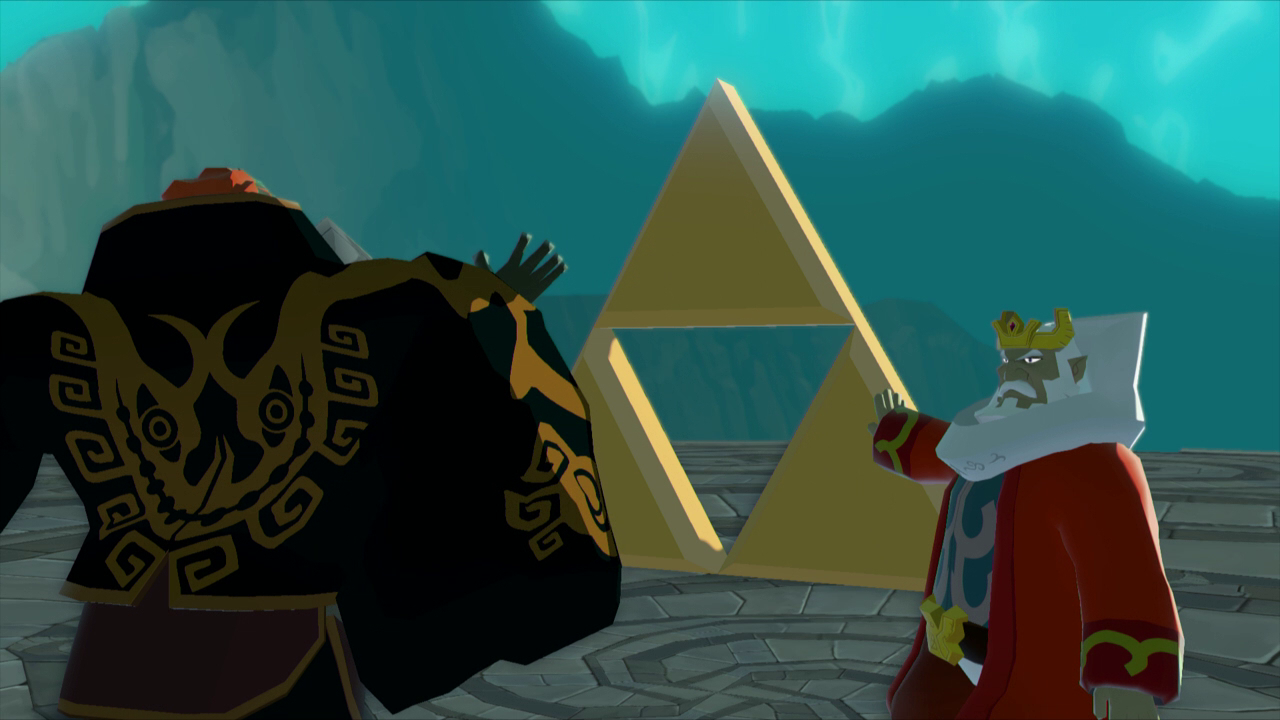
What then do we make of Ganondorf’s reminiscence? In the same manner as with Puppet Ganon, what he says reveals his frame of mind. It’s a subtle but brilliant narrative strategy from the development team. Ganondorf is stuck in the past. He cannot see beyond the old Hyrule kingdom, and he will do anything to get it back, even attack children and murder in cold blood. His obsession for it had deluded him to his own undoing. Note the hint King Daphnes leaves when he bids his farewell. “If only I could do things over again… Not a day of my life has gone by without my thoughts turning to my kingdom of old. I have lived bound to Hyrule. In that sense, I was the same as Ganondorf.”
Like Ganondorf, the King of Red Lions also pined for the past. But there was one powerful difference — the King of Hyrule learned to move on and embrace the future for his country, even if it meant being left behind. His selfless action to wish upon the Triforce for the young Link and Zelda is a stinging contrast to the Gerudo King’s selfishness and deceit. And when the one thing that could grant Ganondorf’s desires became his tombstone, he fell apart right in front of the audience. From that point, Ganondorf’s motives spiraled into malicious intent, setting the stage for an even scarier corruption of himself. More on that later.
Turning the clock back
Was there ever a time you wanted to go back and do things differently? That’s what the Child Timeline is all about. After the Hero of Time returns to his childhood years, he returns to the castle courtyard and gives his warning about Ganondorf to Zelda when he meets her the first time “again.” Their audience with King of Hyrule became the sledgehammer that would convince him to arrest Ganondorf as a prisoner of war. So much for the Gerudo-Hylian peace treaty.
Sentenced to death without trial and guilty by assumption, Ganondorf is taken to the Arbiters Grounds, a Hylian-occupied mega-prison deep in the Gerudo Desert. It’s the Alcatraz of Hyrule if you will. Though canon doesn’t claim it so, it’s pretty safe to say that his Gerudo kingdom did not fare well in this timeline either, considering the fact that the desert is rather barren by the time of Twilight Princess. With their king (and only Gerudo male) imprisoned and their second-in-command whisked to the secluded Sacred Realm, the thief society possessed little chance to survive. Many of them were probably sentenced with Ganondorf for their own crimes. At best, they would have scattered and integrated with the rest of Hyrule. Somehow, they managed to adapt over time and they bounced back as the powerful Gerudo society as seen in Breath of the Wild. But again, that would not happen for at least ten thousand years.
Welcome to Arbiter’s Grounds, the Alcatraz of Hyrule.
As for Ganondorf, the sages had his execution all figured out — he would be killed swiftly by the blade, and then his body would be discarded into the gloom of the Twilight Realm, where all criminals of the Triforce went.
There would be no chance for his surviving followers to mourn, take vengeance, or make him a martyr figure against the Hylians. After all, the sages were doing away with a horrible evil here. Why not take a healthy ounce of prevention? The chosen hero himself had stated the accusation was true, didn’t he?
Indeed, everything made sense to the Child Timeline sages — until Ganondorf survived the execution.
How could the Triforce of Power suddenly manifest on a criminal’s behalf? Was the execution planned in error?
The Triforce, of course, has the ability to transcend alternate timelines. Power already knew its master. But the Sages weren’t aware of that. Ganondorf, ironically, wasn’t aware of it either. But he wasted little time making use of the opportunity by breaking free of his chains and killing one of the sages. Before any more damage could be done, (and more sages killed,) the remaining six sages quickly swept the problem under the rug — they locked the Bearer of Power into the Twilight Realm alive. Hey, they planned to throw him in there anyway. Who would know?
Unfortunately, the fascinating concept of navigating sticky Hyrulean morals and motives was left to be desired in the original Twilight Princess narrative. The story presentation of Ganondorf in Twilight Princess is awkward at best and confusing at several points. It feels forced, artificial. We don’t see a former Gerudo King who is wroth in frustration over being sentenced to death for a future crime. Nor do we see a warmongering villain who feels justified to dominate everything he touches. Instead, we encounter at the very end a bored Ganondorf who seems oddly complacent with his “divine gift.” Having no memory of acquiring the Triforce, it seems the only thing that interests him is an arrogant notion of being “religiously special.” That’s it. No drive for the rest of the Triforce, not even a proper acknowledgment of his adversary. He’s just there chilling with Zelda because they’re supposed to be present for the final showdown. (Though I must admit, Ganondorf’s amusement of Link and Midna’s relationship is quite entertaining when you catch it.)
To make matters worse, Ganondorf’s charismatic star power steals Zant’s thunder. Perhaps Zant was meant to be the catalyst decoy to begin with, but I feel he would have stood mighty fine on his own as the sole Twilight Princess villain. Even with these blunders, Ganondorf’s character foundation was strong enough to pull him through a weaker story and put on a good show. Speaking of shows, it’s time for us to journey through an even crazier narrative — the third timeline and beyond.
A Timeline not for the faint of heart
For a decade and a half, fan theorists upheld the Adult and Child Timelines as logical elements to the flawed but compelling Zelda story canon. The “dual timeline theory” at least made sense in the grand scheme of things — after all, the Hero of Time did travel to the future and back to finish his job. But in 2011, and then in 2013, a curious book came along that upended everything they knew. Called Hyrule Historia, the officially licensed book added a third timeline into the canon mix, and a rather bleak one at that. It was called the “Decline of Hyrule and the Last Hero,” also known as the “Third Timeline” or the “Downfall Timeline.” This version of time supposedly begins after Ganondorf defeats Link in Ocarina of Time. The newer theory didn’t have much substance to validate it. Wouldn’t there be a risk of a timeline being created with every opportunity Link squared off with Ganon? The answer is never addressed. Instead, it seems that Nintendo placed a group of Zelda titles in the third timeline out of convenience rather than logic.
Even within the messy Downfall Timeline, we can still read a pattern of Ganon’s progression or degeneration in this case. As the theory goes, Ganondorf becomes mad with power when he conquers the Hero and acquires all three pieces of the Triforce. Princess Zelda retreats, but she then builds a military force from the shambles of her kingdom. At a heavy cost, the Hyrulean army drives back Ganondorf and seals him away in the Sacred Realm on their own, which is now the Dark World. This is the current basis for the Imprisoning War mentioned in the original Link to the Past manual. It fits the description from a broad perspective, but it does leave out important details. But these details don’t impact Ganondorf in this discussion, so we will move forward for now.
Ganon appears in a cluster of games in the Downfall Timeline, such as Oracle of Ages, Link to the Past, and the first The Legend of Zelda title. Though each of them is different, all of the Downfall games share the common denominator that Ganon is only seen in his beast form. It presents a sound indication that by this point, Ganondorf is corrupted beyond hope. Third timeline or no, his corruption is a factor that cannot be ignored in his character arc. It’s a central component to the classic Link to the Past narrative. There was no going back — Ganondorf’s greed and hatred had permanently turned him into a monster.
This lack of redemption now leads us to an even scarier result of these consequences: the latest original installment, Breath of the Wild.
The steep price of hatred
Nintendo decided to start fresh after dealing with so many titles in the problematic Zelda timelines. They jumped Breath of the Wild 10,000 years into the future, well far ahead of the headaches from its predecessors. (The timeframe is even longer if you count past the backstory legend.) Nintendo further stated that Breath of the Wild reconnected all three timelines into one, perhaps as an attempt to satisfy their diverse fan audience. Indeed, Breath of the Wild is the maverick famous for breaking Zelda conventions. But even with these changes, there was one tradition Nintendo didn’t forget — what Ganon was up to.
Hyrule Castle surrounded by Calamity Ganon, the end result of Ganondorf’s vile decisions.
With the shackles of the past behind Breath of the Wild, old became new again. Nintendo took a page from the first The Legend of Zelda narrative. Instead of a familiar franchise villain with an infamous reputation, Ganon reprised his first role as a mysterious, fearsome being who no one left alive ever saw. They seasoned this change with a surprising twist — he is now known as Calamity Ganon, an ethereal boarlike beast that’s tainted with a horrible substance known as Malice.
At this time, no one knows where Malice comes from or whether it is even a foreign entity separate from Ganon. But from what little we understand, the Breath of the Wild narrative makes it clear: This volatile toxic stuff is the physical manifestation of Ganondorf’s own hatred toward Link and Zelda. No longer does Calamity Ganon desire the Triforce. He will now wipe them out, and Hyrule, in pure spite. The Triforce had already burned him twice. If he can’t have it for himself, then no one should.
The resulting narrative in Breath of the Wild is a sobering tragedy. We witness a princess handicapped from her sealing powers, a kingdom destroyed by robots, and a burdened hero overwhelmed by his ancient adversary. The latter is so far corrupted, finding a trace of his humanity is almost impossible. It’s truly a sad day in Hyrule. Most of the Breath of the Wild‘s characters don’t even know that Calamity Ganon was a “he.” They refer to him as an “it.”
But note how I said that finding his humanity is almost impossible. Almost.
This is where it gets interesting. The final battle with Calamity Ganon proper might not be as impressive in gameplay, but there’s one impressive contextual detail. The abominable creature’s head bears a striking resemblance to Ganondorf’s skull. If you’re daring enough, take pictures of Calamity Ganon and Dark Beast Ganon sometime. The Hyrule Compendium entries are eye-opening, to say the least.
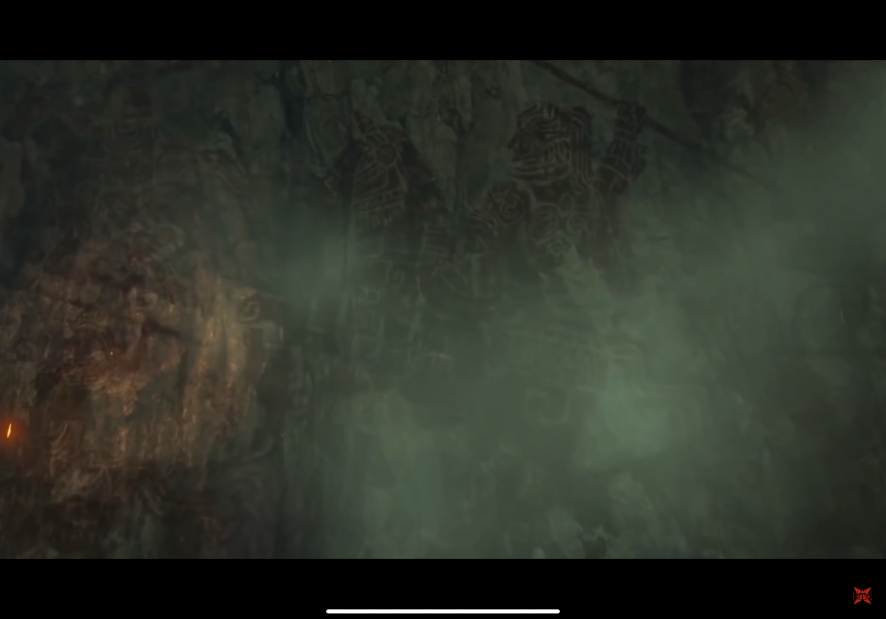
A cave wall mural of Ganondorf caught in the debut Breath of the Wild sequel trailer. Did Nintendo plan this all along since the original title?
And then in 2019, Nintendo pulled the ultimate surprise move. They announced to the world that they are not only making a sequel to the wildly successful Breath of the Wild, but this sequel will also feature a certain Gerudo man with a very creative surprise twist up his sleeve. On that day, the past notions of a permanent beast Ganon were forever broken. With no more burdens of traditional Zelda conventions, what will Ganondorf possibly do this time? Knowing his cunning nature, we will have to wait and see — while again sitting on the edge of our seats.
Chelsea Reed
I’m a ZU writer and author of an up-and-coming sci-fi fantasy novel. All credit of my nerd prowess goes to a dear friend of mine, the true master of Forsaken Fortress.


 by Chelsea Reed on November 2, 2020