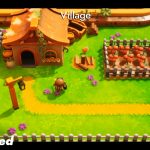
It is increasingly common for indie game developers to cite The Legend of Zelda as an influence, and that has led to an influx of Zelda-inspired games during this gaming generation. The vast majority of those new games, however, are 2D and draw their inspiration from 2D Zelda designs.
The Legend of Zelda: Breath of the Wild is leading the Zelda series in a new direction, and that has left many fans wondering what will happen to the game style that The Legend of Zelda: Ocarina of Time established. My hope is that indie developers will pick up the torch and build games inspired by older 3D Zelda games, and I’m excited to share one such game with you now: Ary and the Secret of Seasons.
Full disclosure
Modus Games graciously gave Zelda Universe a review code for Ary and the Secret of Seasons.
An adventure across all four seasons
Ary and the Secret of Seasons is a 3D adventure game set in the world of Valdi. Each of the four regions of Valdi represents one of the four seasons (spring, summer, autumn, and winter), and the seasons in each region should never change. The adventure begins when the seasons are disrupted and each region is instead thrown into an unfamiliar season.
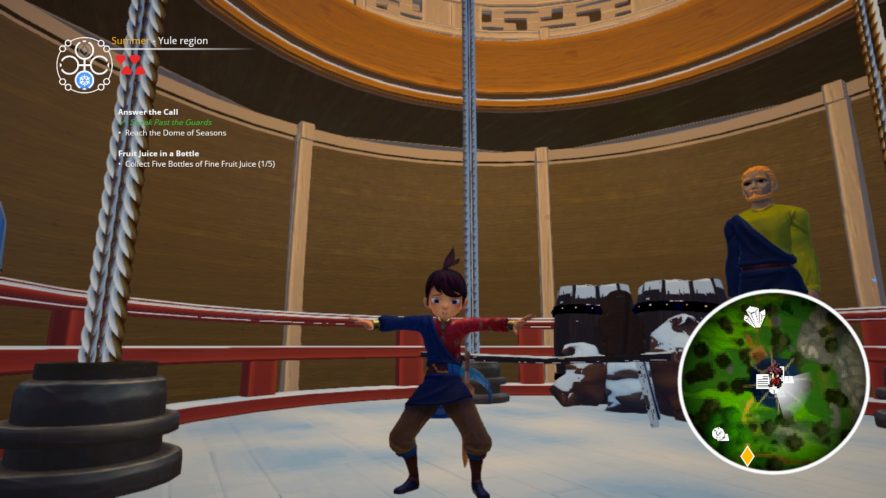
The game begins in Yule, a town that should exist in a never-ending winter. The people there are adapted to the cold, some buildings are partially (or entirely) made from ice, and some paths and bridges are built from ice as well.
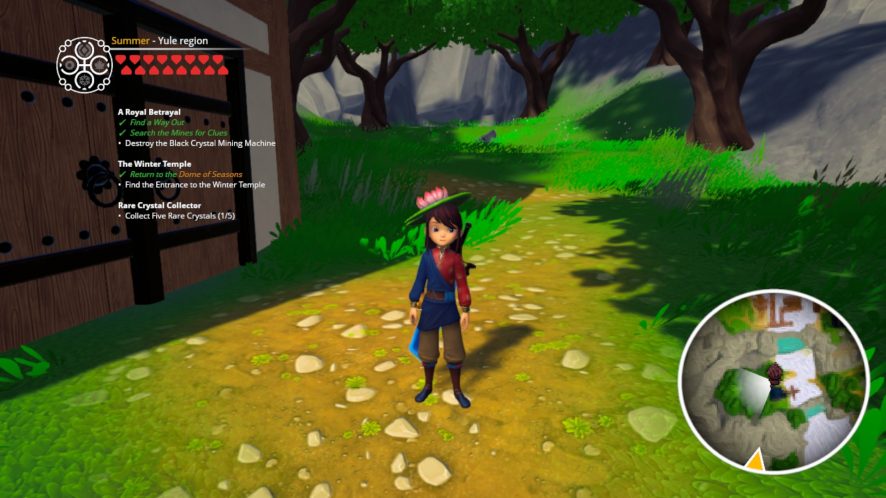
When the seasons are disrupted, Yule is plunged into an unexpected summer. Bridges melt, paths are blocked by thorns, and one poor man loses his entire house.
Nothing to see here. Just a little girl on her way to a secret Guardian meeting.
The same events are happening across the entire world of Valdi, with each region in chaos after their way of life is disrupted by an unfamiliar season.
When the guardians of each region call a meeting to solve the problem, Ary, the daughter of the Winter Guardian, sneaks out of town, takes her father’s place at the meeting, and sets out to restore balance to the seasons of Valdi.
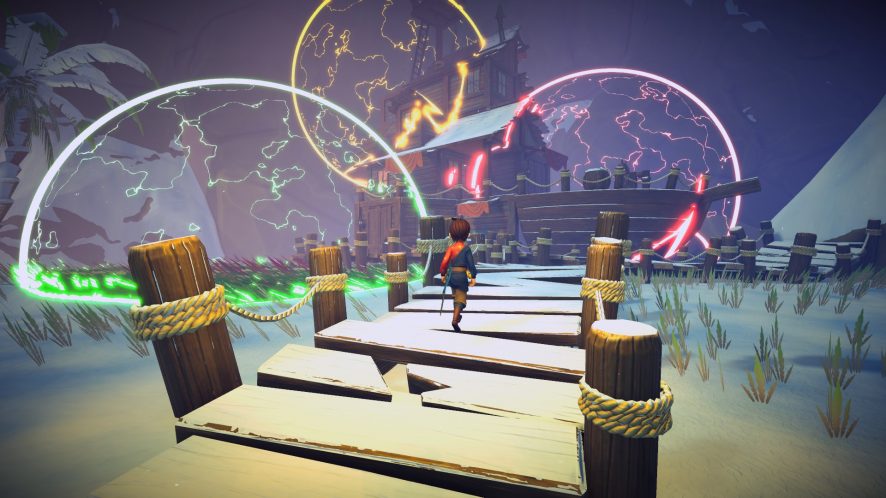
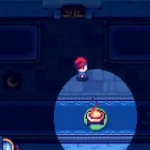
To do that, Ary uses the Medallion of Seasons, which can override the season the area is currently in to create a sphere of another season. For example, you can temporarily rebuild the melted ice bridges in Yule by creating a winter sphere in the place where the bridge existed.
This manipulation of the seasons is the main gameplay hook. You will use all four seasons to travel across Valdi, fight enemies, and solve puzzles.
Manipulating the seasons to solve puzzles is fun and feels great!
I will start by saying that I think the developers made a great decision by giving the player access to all four seasons before the first full dungeon. It opens up an incredible number of possibilities for exploring and interacting with the world. I really enjoyed messing around and seeing what would happen when I mixed-and-matched the seasons around.
There are few restrictions on what you can do with the seasons. You can have three seasons opened in spheres in any area (with the fourth season already being naturally in the area), and you can activate them anywhere. It’s not an exaggeration to say that you can view any area of the game in four different ways.
The main objective is to collect Light Cores, but you have to play for a few hours before the main quest really begins.
However, I must also follow this with my first critique: it takes longer than I would prefer to reach the first full dungeon. It took me more than three hours to reach the first full dungeon, the Summer Temple.
The first few hours of the game are spent on story setup and easing you into mechanics. It went on for so long, though, that I began to wonder if the game had large, themed dungeons at all. It also set an expectation that I would not have access to all four seasons.
You only begin with access to winter, and you pick up summer when you reach the town in the second region (which will be roughly one to two hours into the game if you take your time). I thought I might not get all four seasons until just before the end of the game and never get to use them to their full potential. I was very glad to be wrong about that, but I wish the pacing had not made me doubt it at all.
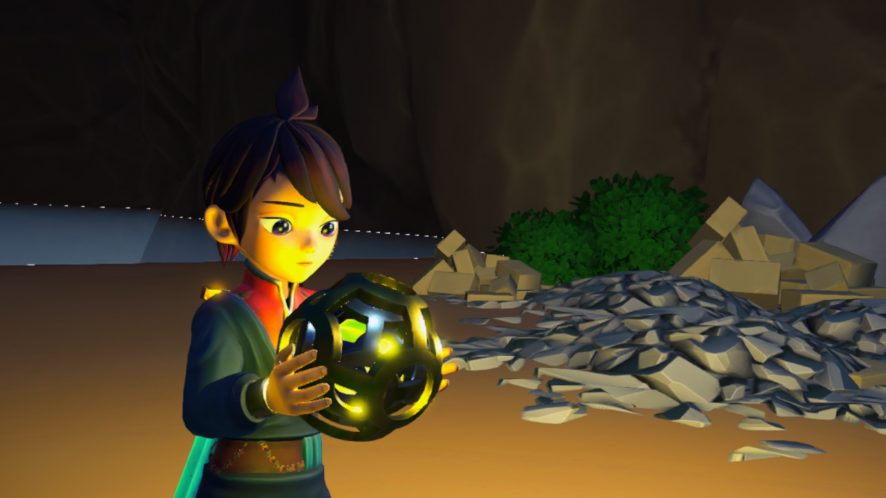
Once the story is properly set up, you learn that the main objective is to collect four Light Cores — one from each of the four Temples of Seasons. This is what the majority of the game is spent working toward, and it’s where Ary and the Secret of Seasons really shines.
To put it simply, I love these dungeons.
Each temple is themed, but not in the ways I expected. First, all of the temples defied my expectations of what a season-themed temple would look like. In particular, the designs of Spring Temple and Winter Temple surprised me.
You can apply all four seasons to the same room. In this example, the room is flooded in every season except spring. In winter, the top of the water is frozen. In summer and autumn, you can swim while inside the spheres.
Next, my expectation was that each temple would focus on puzzles involving a specific season (or perhaps a pair of seasons, by using the true season of the temple to override the season that had taken over). Instead, every season felt useful in every area. Sometimes, it was necessary (or at least useful) to use all four seasons in the same room!
The puzzles in the dungeons generally fall into a few categories that mostly involve activating switches with boxes, balls, or electrical charges, but the challenge — and the fun — is in figuring out how to get from point A to point B by manipulating the seasons.
I never felt like puzzles were becoming repetitive, and some of them were quite challenging to solve even when I understood what I needed to do. The game only has four main dungeons, but all of them are memorable and introduce enough new mechanics to keep everything feeling fresh.
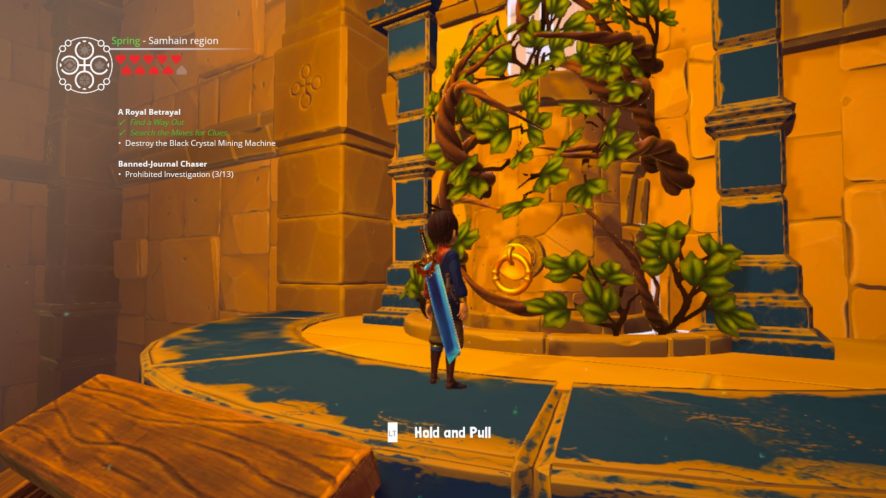
In spring, the switch is covered in vines.
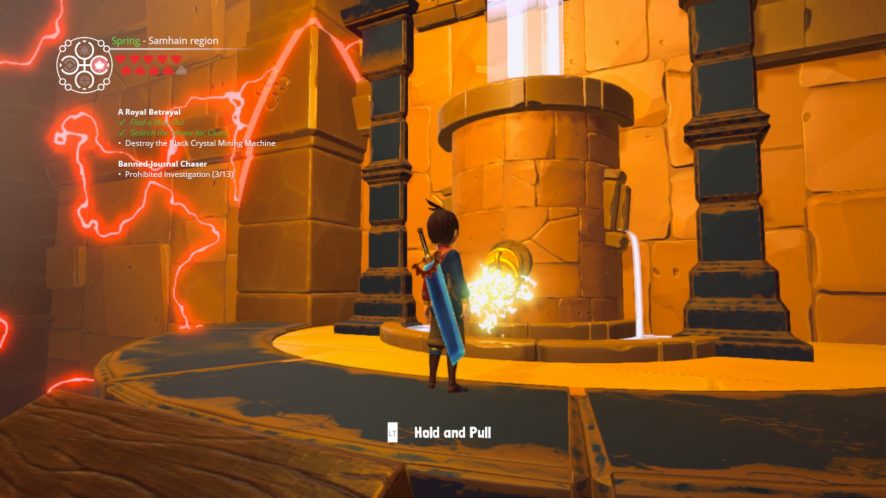
Change the space to autumn to activate the switch.
Better yet, some of the puzzles feel open-ended, as if there’s not just one way to do it. I asked the developers about this and learned that some areas were designed this way intentionally, but I really feel like the game gave me the tools to experiment and see what worked a lot of the time, even if the truth was that there was only one solution.
The only slightly negative thing I can say about the dungeons is that the key items you find inside some of them are a little uninspired. This spreads into the overworld exploration as well. Most of the key items you pick up add passive traversal abilities instead of being items you actively use, and most of them are standard fare in adventure games and platformers. You get a double jump, and the ability to swim and breathe underwater, and so on.
There are exceptions, and I really like them — but I don’t want to spoil them all. One example I will give is that you eventually get a slingshot upgrade that lets you shoot seasons across the room. Normally, when you activate a season, it creates the sphere with Ary standing in the middle of it. With the Seasons Slingshot, you can fire those spheres across the room instead.
It was really important for Ary and the Secret of Seasons to nail the seasons manipulation and experimentation, and I think they succeeded.
Fighting enemies doesn’t feel rewarding
Ary and the Secret of Seasons isn’t all puzzles and exploring. You have to fight enemies too. I do not think the game excels as well in this area, but it’s not bad.
There are a handful of equipable weapons, but the primary weapon is a sword. You can also buy a club, a nicer sword, or even just fight with a big spoon.
Enemies almost always attack in groups, and that does keep you on your toes. Fighting groups of enemies was challenging enough that I died several times to normal enemies, but Ary’s ability to parry attacks felt overpowered and removed the sense of accomplishment from winning those fights. I played the game on the default difficulty. There are harder difficulties available that might solve this problem.
Enemies mostly feel like they are in the way, and that feeling is reinforced more because the enemies do not drop any items. There are no health drops (those come from breaking pots, of course), and no money drops; they don’t drop anything. There is some skill progression, but it’s not tied to winning battles.
Example footage of a simple battle. It can be fun, but the parry ability is at times too strong.
There are a few times in the game where fighting is required to open a locked door, and you cannot open treasure chests when enemies are nearby. Aside from those situations, you can just run away from enemies, but doing so is unsatisfying. I’m happy for the puzzles and exploration to be the focus of the game, but I would prefer it if fighting enemies was always worthwhile. I mostly fought them so they wouldn’t bother me while I was solving a puzzle.
One thing I do really like about the enemy design is how they change with the seasons. For example, some enemies have impenetrable shields of ice during the winter. The only way to hurt them is to pull them into a different season to melt the shield. Certain enemies have thorns for armor in some seasons, and other enemies might not exist at all in some seasons. The developers really took care to make sure that everything was affected by the seasons.
There are two types of treasure chests: those that contain a key item and those that contain money.
Aside from the parry, you have a basic attack combo and a dodge roll. You can also purchase a slingshot for some ranged attacks, but I did not find this very useful until I received the Seasons Slingshot upgrade.
The last combat abilities are Solstice powers, and they are tied to each season. Unfortunately, I did not find them useful and mostly forgot about them after the initial tutorial. These are supposed to be stronger attacks, but I rarely felt the need for them.
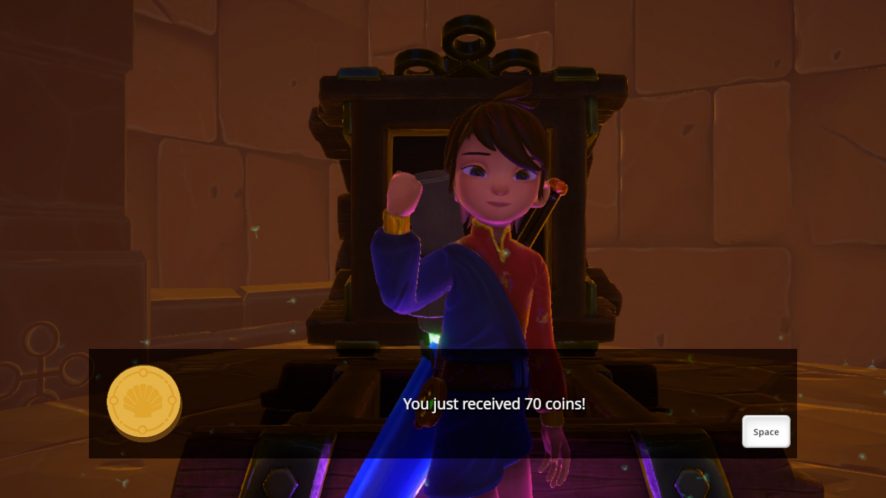
You can upgrade your attack damage, health regeneration (outside of combat), and some other skills by purchasing upgrades from a vendor with the money you find in treasure chests. Money is the only thing you will ever find in a treasure chest, and I never found any reliable way to earn more money, so it’s generally a good idea to go out of your way to get the treasure chests.
Boss battles are memorable and interesting
There is only one negative thing I have to say about the boss battles in Ary and the Secret of Seasons, and I’m going to get it out of the way right now. There aren’t enough bosses!
I don’t want to spoil all of the circumstances, but there isn’t a proper boss at the end of every dungeon. I’m having a hard time choosing the right words to describe the bosses that the game does have. Amazing? Magnificent?
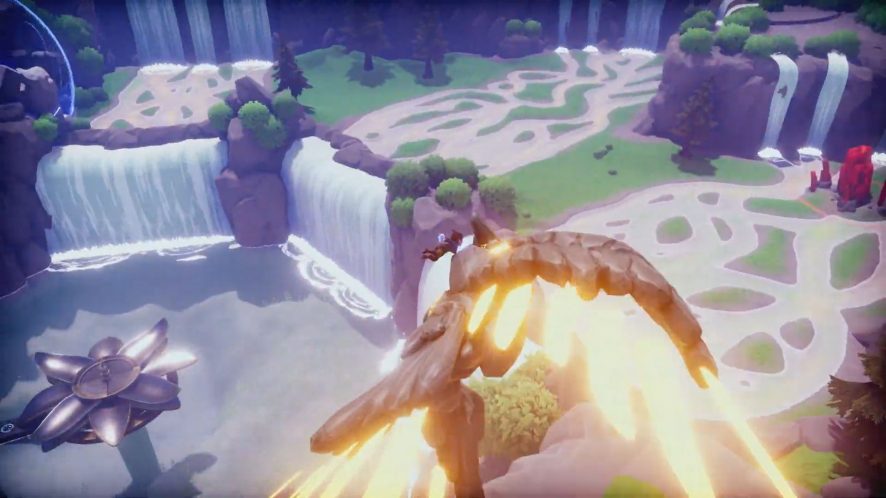
I forgot that I had seen this boss in the trailer before I encountered it, and I hope you do too.
The bosses could have been in the next Zelda game, and I would not have thought twice about it. They are very well designed bosses with the same type of puzzle mechanics that The Legend of Zelda is known for. Because of the slow build-up to reach the full dungeons, I had put nearly seven hours into the game before I reached the first full boss, but doing so was definitely worth it.
I’m trying my best to refrain from spoiling too much about the bosses to preserve the excitement I felt while experimenting with the seasons and learning how to “solve the boss.” I just had to put this section in the review to share my enthusiasm for them. I wish I had kept a save file right before each of the boss fights so that I could fight them again right now!
A world full of places to explore, items to collection, and quests to complete
There is a decent amount of extra optional content in Ary and the Secret of Seasons. From the very beginning, you can pick up sidequests to earn some money and optional items. They are just small fetch quests for the most part, but they do mostly make sense from a story and setting standpoint and help make the world feel a little more real.
A lot of sidequests involve helping the residents navigate their new lives in unfamiliar seasons. For example, when you reach the Summer Region, which is stuck in winter, you find many people in beachwear who are completely unprepared for the cold.
There are also a few sidequests that span the entire game and ask you to collect items found across Valdi. Some of those items, like bottles of juice, are found in seemingly random places and are mostly there for fun. Others, like the journal entries and historical markers, flesh out the game’s backstory and sometimes require puzzle solving to reach.
There is an assortment of clothes, hats, and masks to dress up Ary in a variety of ways. I admittedly did not use them much and opted for the default look, but I’m sure there’s something here for everyone.
Aside from the questing, there is also a collection of costumes, hats, and masks to dress up Ary however you like. I did not mess with them too much because I preferred to spend my money on the combat upgrades.
Finally, there are also health upgrades, which are called Heart Containers, to collect, but they have story significance that I will not spoil in this review.
In all, I think there’s a suitable amount of extra content. I found many things on my initial playthrough, but I’m sure I could put at least a few more hours into the game tracking down everything else that I missed and fully upgrading my abilities.
Catchy music from a familiar artist
I wanted to add a quick note about the music. I’ve found myself enjoying the soundtrack quite a bit and humming some of the tunes even when I’m not playing the game — which is always a good sign if you ask me.
The soundtrack is by The Marcus Hedges Trend Orchestra, who some Zelda fans will be familiar with because of his past work on Zelda orchestrations and other video game and television orchestrations.
A bit of bad news: performance issues and bugs
This part of the review hurts me. I really like this game, but it does have some issues.
I played on PC (via Steam) and encountered several notable bugs. None of them ever broke the game, made it unplayable, or even remotely ruined my experience, but they were there.
I was initially going to list the specifics of what I encountered, but after reporting the bugs to the developer, I was informed that nearly everything I had noticed had been fixed in an upcoming build (that I can only hope will be available at launch or shortly after).
Ary and the Secret of Seasons is also available on PlayStation 4, XBOX One, and Nintendo Switch, and they will be slower to be updated due to the nature of those digital stores.
The developer, Exiin, is very active on their Discord server. It’s very easy to chat with the developers and give feedback. They have acknowledged that the game still has some bugs, but they seem committed to fixing them.
It really is unfortunate. The game plays great the vast majority of the time; it’s just a little rough around the edges. The game was already delayed once before, and I worry that it still needed a little longer to polish up any remaining issues. It would be best if the game could be presented in it’s best form on release day, but that seems unlikely now.
I considered lowering my review score because of the issues I encountered, but because all of the biggest problems were already known and fixed for the next patch I have decided not to do so. If that doesn’t sit well with you, then you can consider my score a half-point too high; the “biggest problems” were all quite minor and did not affect my enjoyment of the game at all.
The inevitable comparison: Oracle of Seasons
Before I end this review, I want to address a comparison that I’m sure a lot of Zelda fans will ask about. It was one of the first things I wondered when I first learned about Ary and the Secret of Seasons a few years ago. How does this game compare to The Legend of Zelda: Oracle of Seasons?
There honestly isn’t too much to say. It’s easy to say “it’s like a 3D version of Oracle of Seasons,” but that doesn’t really do it justice. Both games use the seasons as an important mechanic, but there are a few major distinctions.
Most notably, Oracle of Seasons only lets you change the season on the overworld and in specific places (tree stumps). Changing the season usually changed a region of the overworld.
In Ary and the Secret of Seasons, you can change the season wherever you want. It can be the overworld, inside a dungeon, or even inside a house. But the change is confined to a sphere created by the ability. So, a single house can have multiple seasons inside it at once.
You won’t find one ship that exists in all four seasons in Oracle of Seasons.
Some of the changes brought about by the different seasons are similar in both games. For example, water drying up, vines growing, or frozen platforms appearing.
Overall, these are very different games and I don’t think this comparison is really worth discussing more. It’s an inevitable question from Zelda fans given the surface-level similarities, but there isn’t anything more to it.
Conclusion
I am very glad to have played Ary and the Secret of Seasons. I am not super thrilled with the combat mechanics or how combat upgrades are tied to the money you find in treasure chests, but the superb dungeon and boss designs make all of that matter so much less.
Manipulating the seasons to solve puzzles, fight bosses, and just explore the world is great fun. I’m a little sad that I had to rush through the game in order to write this review in time for release, because I absolutely would have taken my time and played it over a week or two instead.
My initial playthrough, with some extra content completed (but with plenty still remaining), took just under 14 hours. I think it’s a good length for the game despite it’s $40.00 price tag. The content is well-designed and a joy to experience. Modus Games provided this copy to us at no charge for this review, but I have already purchased myself a second copy for Nintendo Switch so that I can play it on the go. Don’t be surprised if you see me playing Ary while standing in line at a convention someday, because I guarantee you that I will be. I’m already excited to replay it!
A short clip of one room from one dungeon — this isn’t even close to the full puzzle solution for this room. The dungeons alone make this game worth playing.
The technical issues are unfortunate, but the developer seems committed to fixing them all. If you are interested in playing on a console, especially the Nintendo Switch, I can see value in waiting a little while for some patches to be released that address the major issues. I really feel like the game just needed a little more time before release to fix up the outstanding problems.
To end this on a high note, I would like to once again reiterate how much fun I had exploring these dungeons. They are incredibly well-designed; the dungeons alone make this game worth playing.
I hope we see more indie developers tackling this style of game, and I hope we see more Ary! There’s definitely room for DLC or a sequel here.
Ary and the Secret of Seasons is available on Steam, PlayStation 4, XBOX One, and Nintendo Switch starting September 1, 2020. Physical copies are also available!
Score: 8/10
Joshua Lindquist
Joshua is one of the webmasters of Zelda Universe and previously founded Zelda Relic. He works behind-the-scenes to build collaboration in the Zelda community. If there's Zelda somewhere, keep an eye out, because he might be there.


 by Joshua Lindquist on September 1, 2020