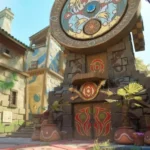
Perhaps the biggest point of contention for folks who didn’t enjoy Majora’s Mask was the strict time limit. The clock ran down quickly, and as the days passed, the stress of completing your quest became more pressing. Though the game gave you tools to slow down time, for many players they weren’t enough to ease the stress. The ever-present moon — with its creepy face and desire to destroy everything — didn’t help either.
But did you know that the three-day cycle was initially planned to be a week?
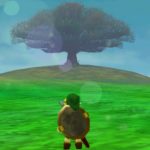
As stated in the ever-wonderful Iwata Asks segment on Nintendo’s official site, the initial plan was to have Majora’s Mask last a full week. The time limit idea came from Ocarina of Time’s day and night cycle, which back in the day was very cool and a novelty, especially for a 3D title.
For those unaware, the development team only had a year to create Majora’s Mask. Since most of the assets already existed, development time would be cut down by a large margin, so a lot of work went into other elements to help the game stand out.
The concept of playing the same days over and over originated when the game’s director, Eiji Aonuma approached Yoshiaki Koizumi for help with the game. Koizumi agreed and became the game’s co-director. The only condition for receiving his help was that the game would use the time travel concept. Koizumi had been working on a different game that intended to use the system, and so all the pieces fell into place.

However, as I mentioned earlier, the time limit was intended to be a week long. In fact, the seven-day period influenced much of the game’s content. A couple of problems arose with this system, though.
First, there was the issue of the game’s short development cycle. Planning content around a whole week would take too long, so a lot of material was shortened to fit the three-day limit. This change helped with the game’s development, but it also made playing Majora’s Mask a more fast-paced and daunting experience. The game’s content was condensed because of the initial week-long idea.
Secondly (and most importantly, in my opinion), Aonuma stated it was a chore to play through a week repeatedly. He also said that because of the length of time, it was difficult to remember what character would be where and on which day. Anyone who has played Majora’s Mask knows that even with the Bomber’s Notebook, it was a daunting task to complete everything and remember where certain characters were.

Majora’s Mask has a feeling that, at least to me, no other game has ever managed to replicate. The sense of dread in the game is thick and has been a popular area of discussion for many people. I believe the game’s use of three days makes the experience more pressing than it would have been with the original time limit. I still wonder what the game would have been like had the system not changed, but I’m also grateful it went the direction it did.